
A federal judge in California just ruled the death penalty unconstitutional. Why?
According to the Death Penalty Information Center:
U.S. District Court Judge Cormac Carney held that California's death penalty is so dysfunctional as to amount to cruel and unusual punishment. Vacating the death sentence of Ernest Jones, who has been on death row for almost 20 years, Judge Carney said the punishment cannot serve the purposes of deterrence or retribution when it is administered to a tiny select few, decades after their sentencing: "Inordinate and unpredictable delay has resulted in a death penalty system in which very few of the hundreds of individuals sentenced to death have been, or even will be, executed by the State. It has resulted in a system in which arbitrary factors, rather than legitimate ones like the nature of the crime or the date of the death sentence, determine whether an individual will actually be executed. And it has resulted in a system that serves no penological purpose. Such a system is unconstitutional." Read the Court's Opinion.
California has sentenced more than 900 people to death row since the 70s but has executed less than 20. I'd call that freakish. Just like I've taught and written about the death penalty in the entire US. Freakish.
Check out these facts of the death penalty just offered by CNN here. There you will find cool graphics will facts about executions per year in the US, executions by country in the world, executions by state, methods of death in the US, race, etc.
Good stuff!

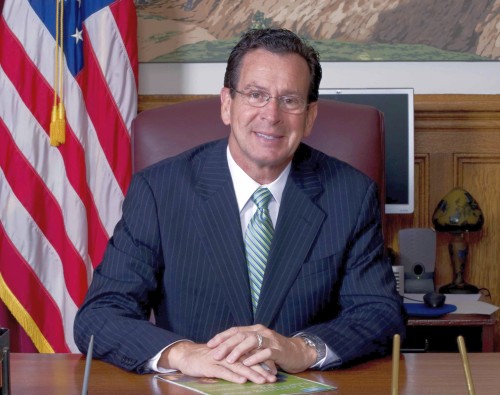 On April 25, Connecticut Governor Dannel Malloy (pictured) signed into law a bill that replaces the death penalty with life without parole. Connecticut is the fifth state in five years, and the 17th overall, to do away with capital punishment. Governor Malloy, who once supported the death penalty, offered the following statement: “My position on the appropriateness of the death penalty in our criminal justice system evolved over a long period of time. As a young man, I was a death penalty supporter. Then I spent years as a prosecutor and pursued dangerous felons in court, including murderers. In the trenches of a criminal courtroom, I learned firsthand that our system of justice is very imperfect. While it’s a good system designed with the highest ideals of our democratic society in mind, like most of human experience, it is subject to the fallibility of those who participate in it. I saw people who were poorly served by their counsel. I saw people wrongly accused or mistakenly identified. I saw discrimination. In bearing witness to those things, I came to believe that doing away with the death penalty was the only way to ensure it would not be unfairly imposed." See more of the governor's statement below.


— Nearly 70% said they would sanction the early release of some low-level offenders whose crimes did not involve violence.
— About 80% said they approve of keeping low-level, nonviolent offenders in county custody — including jails, home detention or parole — instead of sending them to state prisons. The same percentage favors paroling inmates who are paralyzed, in comas or so debilitated by advanced disease that they no longer pose a threat to public safety.
The pollsters noted that people don't generally favor the release of convicted criminals. But "when it comes to prisons," said Linda DiVall of American Viewpoint, "voters are looking for solutions that don't raise taxes or take money from other priorities like education."

