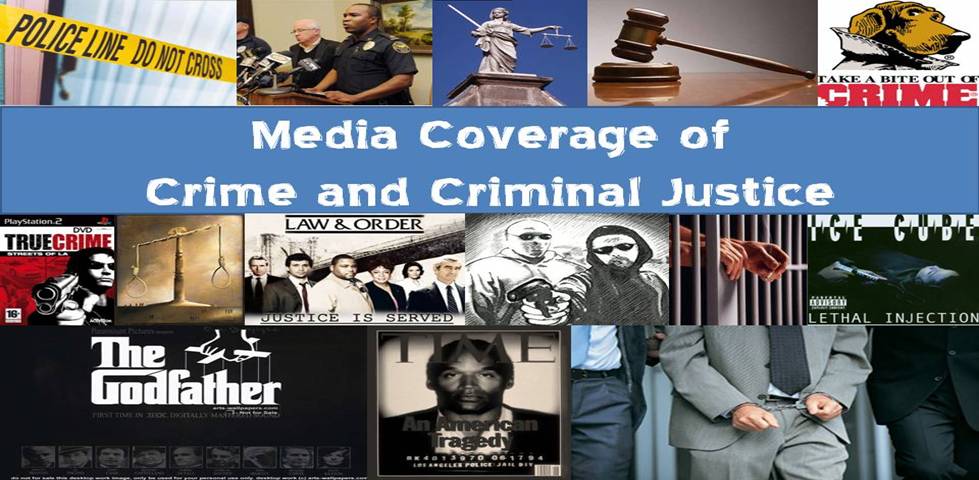
This issue is raised in the book.
In it, I argue that the law tends to represent the powerful but also suggest that normal, ordinary people can also have their will impact the law, consistent with the pluralist view of the law. Yet, there is no doubt that the powerful tend to win when it comes to making the law.
This is not, and should not be, a controversial statement. After all, lawmakers tend to be very wealthy. So, they make the law. Also, it is the powerful who tend to fund the law as well, in the form of campaign contributions.
Thus, studies like this one should not surprise you. Here is a summary from Think Progress:
When organized interest groups or economic elites want a particular policy passed, there’s a strongly likelihood their wishes will come true. But when average citizens support something, they have next to no influence.
That’s according to a forthcoming article in Perspectives on Politics
by Martin Gilens of Princeton University and Benjamin I. Page of
Northwestern University. The two looked at a data set of 1,779 policy
issues between 1981 and 2002 and matched them up against surveys of
public opinion broken down by income as well as support from interest
groups.
They estimate that the impact of what an average citizen prefers put
up against what the elites and interest groups want is next to nothing,
or “a non-significant, near-zero level.” They note that their findings
show “ordinary citizens…have little or no independent influence on
policy at all.” The affluent, on the other hand, have “a quite
substantial, highly significant, independent impact on policy,” they
find, “more so than any other set of actors” that they studied.
Organized interest groups similarly fare well, with “a large, positive,
highly significant impact on public policy.”
When they hold constant the preferences of interest groups and the
rich, “it makes very little difference what the general public thinks,”
they note. The probability that policy change occurs is basically the
same whether a small group or a large majority of average citizens are
in favor. On the other hand, all else being the same, opposition from
the wealthy means that a particular policy is only adopted about 18
percent of the time, but when they support it it gets adopted 45 percent
of the time. Similar patterns are true for interest groups. The impact
could also be even higher than their findings, as there may be policy
differences among those they count as wealthy, which means that the
imprecision in their measure “is likely to produce underestimates of the
impact of economic elites on policy making,” they write.
Search This Blog
Showing posts with label powerful. Show all posts
Monday, April 14, 2014
Wednesday, July 31, 2013
Stories you WON'T see in the mainstream press today
One the main points of the book is that you cannot (and should not) rely on the mainstream media exclusively for your information. Why not? Because it is owned and operated by corporations, which clearly have a bias in terms of keeping some things out of the news.
So, you can check out alternative sources on the left or right of the political spectrum, as well as objective advocacy journalism organizations for stories about powerful people that do not tend to appear in the mainstream news.
Here are some examples from today...now why would the corporate owned media NOT be interested in such stories?
So, you can check out alternative sources on the left or right of the political spectrum, as well as objective advocacy journalism organizations for stories about powerful people that do not tend to appear in the mainstream news.
Here are some examples from today...now why would the corporate owned media NOT be interested in such stories?
-
New Monetary Systems for a Sustainable Democracy and "The Great Turning"
By Margaret Flowers and Kevin Zeese, Truthout | News Analysis -
There Is No Good Drug War
By Maya Schenwar, Truthout | Interview -
On the News With Thom Hartmann: The Third Circuit Court of Appeals Has Ruled on a New Aspect of Corporate Personhood, and More
By Thom Hartmann, The Thom Hartmann Program | News Report
Internal EPA Presentation Reveals Dispute Over Fracking Contamination in Dimock Wells
By Mike Ludwig, Truthout | News
In Oakland, Airport Workers Cite Unfair Practices
By David Bacon, Truthout | Photo Essay
The Business of Mass Incarceration
By Chris Hedges, TruthDig | Report
Worldwide Support Grows for Iraq Human Rights Hearing
By Laura Raymond and Leah Todd, Truthout | News
Tuesday, August 21, 2012
Right here is why need independent media
Every day, while checking on and reading from the mainstream news, I do my best to see what non-profit, consumer driven news organizations are talking about.
Here is a great example of why these organizations are so important. In the book, the issues of who writes the law and who the law serves are examined. The main argument is that the mainstream media rarely raise these issues because they are vested in the same status quo as lawmakers.
In the article, the authors show how one area of big business controls the law to its own advantage. This is not a controversial claim that powerful interests impact the law through their donations. After all, we as humans are not into throwing away our money for nothing.
So consider this, from the article:
How much is democracy worth to you?
If you’re like most people, it’s priceless. But for the hedge funds and insurance companies on Wall Street, it does have a price tag. And now, thanks to a new report by Global Exchange, we know the number on it: approximately $4.2 billion. That’s how much the Finance, Insurance, and Real Estate (F.I.R.E.) sector has invested in political influence through campaign contributions and lobbying since 2006. That comes to $1,331 a minute spent on political power.
The new report is called “Meet the F.I.R.E. Sector: How Wall Street Is Burning Democracy.” It was developed by Elect Democracy, a nonpartisan effort by Global Exchange to expose and challenge the impact of corporate money in U.S. politics. The report contains extensive research tracking Wall Street’s investment in political power, and analyzes exactly how Wall Street has secured what Global Exchange calls “industry-loyal voting practices” in Congress: by shoveling stacks of campaign cash in the direction of Congressional hopefuls from both major political parties.
That money lets these industries get what they want in Washington. The F.I.R.E. sector contributed $879 million to members of Congress since 2006, and took positions on 383 bills during the 112th Congress. For instance, they supported Free Trade Agreements with Korea, Panama, and Colombia in 2007, and backed the bailout in 2008. Bills they opposed include the Dodd-Frank Wall Street Reform and Consumer Protection Act of 2009, the Limited Homeowner and Investor Loss in Foreclosure Act of 2010, and the Stop Student Loan Interest Rate Hike Act of 2011.
Got it? They give lots of money. They get laws that benefit them.
And you can make a call, send an email or fax, sign a petition, and vote. Of course you can also give a sizeable amount of money to political parties or candidates, but if you're like moer than 99% of Americans, you don't.
Here is a great example of why these organizations are so important. In the book, the issues of who writes the law and who the law serves are examined. The main argument is that the mainstream media rarely raise these issues because they are vested in the same status quo as lawmakers.
In the article, the authors show how one area of big business controls the law to its own advantage. This is not a controversial claim that powerful interests impact the law through their donations. After all, we as humans are not into throwing away our money for nothing.
So consider this, from the article:
How much is democracy worth to you?
If you’re like most people, it’s priceless. But for the hedge funds and insurance companies on Wall Street, it does have a price tag. And now, thanks to a new report by Global Exchange, we know the number on it: approximately $4.2 billion. That’s how much the Finance, Insurance, and Real Estate (F.I.R.E.) sector has invested in political influence through campaign contributions and lobbying since 2006. That comes to $1,331 a minute spent on political power.
The new report is called “Meet the F.I.R.E. Sector: How Wall Street Is Burning Democracy.” It was developed by Elect Democracy, a nonpartisan effort by Global Exchange to expose and challenge the impact of corporate money in U.S. politics. The report contains extensive research tracking Wall Street’s investment in political power, and analyzes exactly how Wall Street has secured what Global Exchange calls “industry-loyal voting practices” in Congress: by shoveling stacks of campaign cash in the direction of Congressional hopefuls from both major political parties.
That money lets these industries get what they want in Washington. The F.I.R.E. sector contributed $879 million to members of Congress since 2006, and took positions on 383 bills during the 112th Congress. For instance, they supported Free Trade Agreements with Korea, Panama, and Colombia in 2007, and backed the bailout in 2008. Bills they opposed include the Dodd-Frank Wall Street Reform and Consumer Protection Act of 2009, the Limited Homeowner and Investor Loss in Foreclosure Act of 2010, and the Stop Student Loan Interest Rate Hike Act of 2011.
Got it? They give lots of money. They get laws that benefit them.
And you can make a call, send an email or fax, sign a petition, and vote. Of course you can also give a sizeable amount of money to political parties or candidates, but if you're like moer than 99% of Americans, you don't.
Subscribe to:
Posts (Atom)


