This is the story of an innocent man put to death by the state of Texas.
Shocking in the details ... BUT worth the read. Most enlightening is the fact that his innocence was only really discovered after an exhaustive review. Imagine how many other such cases we might find if we really look!
Like these?
Don't think any innocent person has ever been put to death by the state of Texas?
What about this guy?
It's nice such stories are covered in the media. But why aren't these "front page" stories even now?
Showing posts with label innocence. Show all posts
Showing posts with label innocence. Show all posts
Monday, July 21, 2014

Wednesday, April 30, 2014
Botched execution in the news
Botched executions are nothing new. See?
And then, last night, in Oklahoma, we saw this (from the Death Penalty Information Center):
BREAKING NEWS: (4/29). The first of two planned executions in Oklahoma tonight was botched, with the inmate, Clayton Lockett, dying of a heart attack. Lockett sat up and uttered words, even as the execution was going forward. The second execution of Charles Warner was called off. Oklahoma was trying a new execution protocol for the first time. It had refused to reveal the source of the drugs or the names of those involved.
Why did this happen? Here are the basic facts:
* The Constitutionality of lethal injection in Oklahoma, like in other states, is being challenged on the basis of allegedly causing pain to inmates
* Painful and lingering deaths are considered a violation of the Eighth Amendment to the US Constitution, according to the US Supreme Court
* States are thus changing their execution protocols, including which drugs they use to put inmates to death and where they get the drugs
* In Oklahoma, the process was kept secret
* Inmates challenged the process
* An Oklahoma court declared a stay in these two executions for this reason
* Oklahoma's governor said she was going to make sure they were killed anyway, in spite of the court order
* The court lifted the stay
And the rest is history. More of our sordid death penalty history, that is.
According to the Associated Press:

And then, last night, in Oklahoma, we saw this (from the Death Penalty Information Center):
BREAKING NEWS: (4/29). The first of two planned executions in Oklahoma tonight was botched, with the inmate, Clayton Lockett, dying of a heart attack. Lockett sat up and uttered words, even as the execution was going forward. The second execution of Charles Warner was called off. Oklahoma was trying a new execution protocol for the first time. It had refused to reveal the source of the drugs or the names of those involved.
Why did this happen? Here are the basic facts:
* The Constitutionality of lethal injection in Oklahoma, like in other states, is being challenged on the basis of allegedly causing pain to inmates
* Painful and lingering deaths are considered a violation of the Eighth Amendment to the US Constitution, according to the US Supreme Court
* States are thus changing their execution protocols, including which drugs they use to put inmates to death and where they get the drugs
* In Oklahoma, the process was kept secret
* Inmates challenged the process
* An Oklahoma court declared a stay in these two executions for this reason
* Oklahoma's governor said she was going to make sure they were killed anyway, in spite of the court order
* The court lifted the stay
And the rest is history. More of our sordid death penalty history, that is.
According to the Associated Press:
Clayton Lockett, 38, was declared
unconscious 10 minutes after the first of the state's new three-drug
lethal injection combination was administered. Three minutes later,
though, he began breathing heavily, writhing, clenching his teeth and
straining to lift his head off the pillow.
The
blinds were eventually lowered to prevent those in the viewing gallery
from watching what was happening in the death chamber, and the state's
top prison official eventually called a halt to the proceedings. Lockett
died of a heart attack a short time later, the Department of
Corrections said.
Now, let's be clear. We're not talking about a nice guy here. From the AP:
A four-time felon, Lockett was
convicted of shooting 19-year-old Stephanie Neiman with a sawed-off
shotgun and watching as two accomplices buried her alive in rural Kay
County in 1999 after Neiman and a friend arrived at a home the men were
robbing.
Regardless, to be put to death, the practice has to be Constitutional. And right now, it is not.
Incredibly, another inmate in Oklahoma was supposed to be executed the same night. But his execution was stayed for 14 days after this mess. What was he convicted of?
According to the AP:
Warner had been
scheduled to be put to death two hours later in the same room and on the
same gurney. The 46-year-old was convicted of raping and killing his
roommate's 11-month-old daughter in 1997. He has maintained his
innocence.
See that last part? Don't think it's possible?
Consider this then:
On April 28 a study published in the prestigous Proceedings of the National Academy of Sciences
indicated that far more innocent people have been sentenced to death
than those found through the legal process. According to the study, many
innocent defendants are probably not being identified because they were
taken off death row and given a lesser sentence. The rate of
exonerations for those sentenced to death would be over twice as high if
all cases were given the heightened scrutiny often accorded to those
who remain on death row. The authors of "The Rate of False Conviction of Criminal Defendants Who are Sentenced to Death"
concluded: "[A] conservative estimate of the proportion of erroneous
convictions of defendants sentenced to death in the United States from
1973 through 2004 [is] 4.1%." The percentage of death row inmates who
were actually exonerated during the time of the study was only 1.6%.
Professor Samuel Gross (pictured) of the University of Michigan Law
School, one of the authors of the study, pointed to the gravity of the
problem: “Since 1973, nearly 8,500 defendants have been sentenced to
death in the United States, and 138 of them have been exonerated. Our
study means that more than 200 additional innocent defendants have been
sentenced to death in that period. Most of these undiscovered innocent
capital defendants have been resentenced to life in prison, and then
forgotten.”
Are you tired of this process yet?
Wednesday, December 4, 2013
Innocent people in prison? I'm shocked!
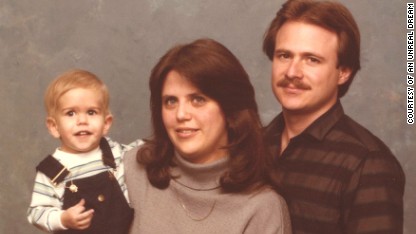
Michael Morton's amazing journey
Jurors didn't believe Michael Morton when he said he didn't kill his
wife. By the time DNA tests proved his innocence, Morton had lost 25
years in prison.
FULL STORY
- Exonerated: Cases by the numbers
- 1st day in prison
 | Why?
 - Why America imprisons so many
- 'Unreal Dream:' Thursday at 9 p.m.
Be sure to read the story linked above about why America imprisons so many; it is about the imbalance in courts where the prosecutor has all the power, the war on drugs, and how this leads to more incarceration.
Thursday, May 17, 2012
2 men, same state, both executed, both innocent
The Huffington Post carried an article outlining some of the similiarities between Carlos DeLuna and Cameron Willamham, both convicted, sentenced to death, and executed for murders they did not commit.
One of the similarities? Shockingly bad police work.
Read more:
http://www.huffingtonpost.com/2012/05/16/carlos-deluna-cameron-todd-willingham_n_1521755.html?ref=fb&src=sp&comm_ref=false
One of the similarities? Shockingly bad police work.
Read more:
http://www.huffingtonpost.com/2012/05/16/carlos-deluna-cameron-todd-willingham_n_1521755.html?ref=fb&src=sp&comm_ref=false
Wednesday, May 16, 2012
Innocent people killed by death penalty?
It's been all over the news lately, the case of Carlos DeLuna ... the high likelihood that the state of Texas killed yet another innocent man.
Another? Yes, wait for it.
Here is the story from the Death Penalty Information Center:
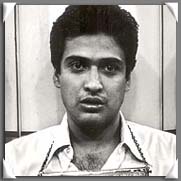 In
one of the most comprehensive investigations ever undertaken about the
execution of a possibly innocent defendant, Professor James Liebman and
other researchers at Columbia University Law School have published a
groundbreaking report on the case of Carlos DeLuna (pictured), who was executed in Texas in 1989. This "Anatomy of a Wrongful Execution" is being published today (May 15) in Columbia's Human Rights Law Review.
Prof. Liebman concluded DeLuna was innocent and was wrongly convicted
"on the thinnest of evidence: a single, nighttime, cross-ethnic
eyewitness identification and no corroborating forensics." DeLuna
maintained his innocence from the time of his arrest until his
execution, claiming that the actual culprit was Carlos Hernandez, who
looked so similar to DeLuna that friends and family had mistaken photos
of the two men for each other. Prosecutors called Hernandez a "phantom"
of DeLuna's imagination, although Hernandez was known to police and
prosecutors because of his history of violent crimes, including armed
robberies and an arrest for a murder similar to the one for which DeLuna
was executed. Liebman's investigation found that Hernandez "spent years
bragging around Corpus Christi that he, not his tocayo - his namesake and 'twin' - Carlos DeLuna, killed Wanda Lopez."
In
one of the most comprehensive investigations ever undertaken about the
execution of a possibly innocent defendant, Professor James Liebman and
other researchers at Columbia University Law School have published a
groundbreaking report on the case of Carlos DeLuna (pictured), who was executed in Texas in 1989. This "Anatomy of a Wrongful Execution" is being published today (May 15) in Columbia's Human Rights Law Review.
Prof. Liebman concluded DeLuna was innocent and was wrongly convicted
"on the thinnest of evidence: a single, nighttime, cross-ethnic
eyewitness identification and no corroborating forensics." DeLuna
maintained his innocence from the time of his arrest until his
execution, claiming that the actual culprit was Carlos Hernandez, who
looked so similar to DeLuna that friends and family had mistaken photos
of the two men for each other. Prosecutors called Hernandez a "phantom"
of DeLuna's imagination, although Hernandez was known to police and
prosecutors because of his history of violent crimes, including armed
robberies and an arrest for a murder similar to the one for which DeLuna
was executed. Liebman's investigation found that Hernandez "spent years
bragging around Corpus Christi that he, not his tocayo - his namesake and 'twin' - Carlos DeLuna, killed Wanda Lopez."
For years, opponents of the death penalty have pointed out the very real possibility that innocent people are killed with the death penalty. They've pointed to things like the "innocence list" from the Death Penalty Information Center, which now stands at an amazing 140 people released from death row since 1973.
Supporters have often responded with, where is your proof? Name one person who is innocent that is actually killed. And until recently, it was difficult to provide an answer.
The Death Penalty Information Center maintains a page featuring people executed despite serious doubts about their guilt. On that page are NINE cases, including that of Carlos DeLuna, noted above.
But also on that page is the case of Cameron Willingham, also out of Texas, which has also received an enormous amount of news:
Cameron Willingham Texas Convicted: 1992, Executed: 2004
After examining evidence from the capital prosecution of Cameron Willingham, four national arson experts have concluded that the original investigation of Willingham's case was flawed, and it is possible the fire was accidental. The independent investigation, reported by the Chicago Tribune, found that prosecutors and arson investigators used arson theories that have since been repudiated by scientific advances. Willingham was executed in 2004 in Texas despite his consistent claims of innocence. He was convicted of murdering his three children in a 1991 house fire.
Arson expert Gerald Hurst said, "There's nothing to suggest to any reasonable arson investigator that this was an arson fire. It was just a fire." Former Louisiana State University fire instructor Kendall Ryland added, "[It] made me sick to think this guy was executed based on this investigation.... They executed this guy and they've just got no idea - at least not scientifically - if he set the fire, or if the fire was even intentionally set."
Willingham was convicted of capital murder after arson investigators concluded that 20 indicators of arson led them to believe that an accelerent had been used to set three separate fires inside his home. Among the only other evidence presented by prosecutors during the the trial was testimony from jailhouse snitch Johnny E. Webb, a drug addict on psychiatric medication, who claimed Willingham had confessed to him in the county jail.
Some of the jurors who convicted Willingham were troubled when told of the new case review. Juror Dorinda Brokofsky asked, "Did anybody know about this prior to his execution? Now I will have to live with this for the rest of my life. Maybe this man was innocent." Prior to the execution, Willingham's defense attorneys presented expert testimony regarding the new arson investigation to the state's highest court, as well as to Texas Governor Rick Perry. No relief was granted and Willingham was executed on February 17, 2004. Coincidentally, less than a year after Willingham's execution, arson evidence presented by some of the same experts who had appealed for relief in Willingham's case helped free Ernest Willis from Texas's death row. The experts noted that the evidence in the Willingham case was nearly identical to the evidence used to exonerate Willis. (Chicago Tribune, December 9, 2004).
Read "Texas Man Executed on Disproved Forensics" by Steve Mills and Maurice Possley, Chicago Tribune (December 9, 2004)
Read "Was an Innocent Man Executed in Texas?" by Anderson Cooper 360 Blog (April 9, 2007)
See also The Ernest Willis Case
The point of all this? It is pretty clear to anyone with any brain activity that the state of Texas has executed AT LEAST two innocent people.And why Texas? Because they lead the free world in the number of executions every year. And we know that the more a state carries out executions, the more mistakes they will make.
Some will react to this news with horror. Others won't care. Seriously, for some it is just an unfortunate reality, the cost of doing justice.
I think of people who have argued publicly that they support the death penalty even knowing that innocent people are occasionally innocent. One such person--Louis Pojman--even wrote something to the effect of this:
We know that, when firefighters are fighting fires, that a fire truck will occasionally run through a red light and kill an innocent bystander. Yet, we don't abolish firefighting just because every once in a while an innocent person is killed. After all, firefighters serve a vital function for society. They save lives.
This analogy has always bothered me. First, the death penalty is different than firefighting. Fire fighters aim to save lives; the death penalty merely takes lives (there is now literally no valid evidence that the death penalty deters murder and thus saves lives). Second, of course we don't abolish firefighting. There is no other way to put out fires. There are, however, other ways to reduce murder and to punish murderers. And they do not run the risk of killing an innocent person.
Many Americans really care about "big government." Amazingly, they get all upset when the government taxes them too much. We even have a new "Tea Party" (even though tax rates are at an all-time low; they are lower now than under the previous President and far lower than the last Democratic President). But they couldn't care less about the government killing them and their fellow citizens, apparently even when the people being killed are innocent.
Fortunately for those of us who see it differently, the writing is on the wall. Innocent people being killed by states will end the death penalty. We are well on our way, even in North Carolina where studies show the death penalty to be rare, ineffective, costly, racially biased, and a threat to the innocent. Hopefully, Texas will join the sane world soon.
Another? Yes, wait for it.
Here is the story from the Death Penalty Information Center:
INNOCENCE: New Evidence That Texas May Have Executed an Innocent Man
Posted: May 15, 2012
In
one of the most comprehensive investigations ever undertaken about the
execution of a possibly innocent defendant, Professor James Liebman and
other researchers at Columbia University Law School have published a
groundbreaking report on the case of Carlos DeLuna (pictured), who was executed in Texas in 1989. This "Anatomy of a Wrongful Execution" is being published today (May 15) in Columbia's Human Rights Law Review.
Prof. Liebman concluded DeLuna was innocent and was wrongly convicted
"on the thinnest of evidence: a single, nighttime, cross-ethnic
eyewitness identification and no corroborating forensics." DeLuna
maintained his innocence from the time of his arrest until his
execution, claiming that the actual culprit was Carlos Hernandez, who
looked so similar to DeLuna that friends and family had mistaken photos
of the two men for each other. Prosecutors called Hernandez a "phantom"
of DeLuna's imagination, although Hernandez was known to police and
prosecutors because of his history of violent crimes, including armed
robberies and an arrest for a murder similar to the one for which DeLuna
was executed. Liebman's investigation found that Hernandez "spent years
bragging around Corpus Christi that he, not his tocayo - his namesake and 'twin' - Carlos DeLuna, killed Wanda Lopez."For years, opponents of the death penalty have pointed out the very real possibility that innocent people are killed with the death penalty. They've pointed to things like the "innocence list" from the Death Penalty Information Center, which now stands at an amazing 140 people released from death row since 1973.
Supporters have often responded with, where is your proof? Name one person who is innocent that is actually killed. And until recently, it was difficult to provide an answer.
The Death Penalty Information Center maintains a page featuring people executed despite serious doubts about their guilt. On that page are NINE cases, including that of Carlos DeLuna, noted above.
But also on that page is the case of Cameron Willingham, also out of Texas, which has also received an enormous amount of news:
Cameron Willingham Texas Convicted: 1992, Executed: 2004
After examining evidence from the capital prosecution of Cameron Willingham, four national arson experts have concluded that the original investigation of Willingham's case was flawed, and it is possible the fire was accidental. The independent investigation, reported by the Chicago Tribune, found that prosecutors and arson investigators used arson theories that have since been repudiated by scientific advances. Willingham was executed in 2004 in Texas despite his consistent claims of innocence. He was convicted of murdering his three children in a 1991 house fire.
Arson expert Gerald Hurst said, "There's nothing to suggest to any reasonable arson investigator that this was an arson fire. It was just a fire." Former Louisiana State University fire instructor Kendall Ryland added, "[It] made me sick to think this guy was executed based on this investigation.... They executed this guy and they've just got no idea - at least not scientifically - if he set the fire, or if the fire was even intentionally set."
Willingham was convicted of capital murder after arson investigators concluded that 20 indicators of arson led them to believe that an accelerent had been used to set three separate fires inside his home. Among the only other evidence presented by prosecutors during the the trial was testimony from jailhouse snitch Johnny E. Webb, a drug addict on psychiatric medication, who claimed Willingham had confessed to him in the county jail.
Some of the jurors who convicted Willingham were troubled when told of the new case review. Juror Dorinda Brokofsky asked, "Did anybody know about this prior to his execution? Now I will have to live with this for the rest of my life. Maybe this man was innocent." Prior to the execution, Willingham's defense attorneys presented expert testimony regarding the new arson investigation to the state's highest court, as well as to Texas Governor Rick Perry. No relief was granted and Willingham was executed on February 17, 2004. Coincidentally, less than a year after Willingham's execution, arson evidence presented by some of the same experts who had appealed for relief in Willingham's case helped free Ernest Willis from Texas's death row. The experts noted that the evidence in the Willingham case was nearly identical to the evidence used to exonerate Willis. (Chicago Tribune, December 9, 2004).
Read "Texas Man Executed on Disproved Forensics" by Steve Mills and Maurice Possley, Chicago Tribune (December 9, 2004)
Read "Was an Innocent Man Executed in Texas?" by Anderson Cooper 360 Blog (April 9, 2007)
See also The Ernest Willis Case
The point of all this? It is pretty clear to anyone with any brain activity that the state of Texas has executed AT LEAST two innocent people.And why Texas? Because they lead the free world in the number of executions every year. And we know that the more a state carries out executions, the more mistakes they will make.
Some will react to this news with horror. Others won't care. Seriously, for some it is just an unfortunate reality, the cost of doing justice.
I think of people who have argued publicly that they support the death penalty even knowing that innocent people are occasionally innocent. One such person--Louis Pojman--even wrote something to the effect of this:
We know that, when firefighters are fighting fires, that a fire truck will occasionally run through a red light and kill an innocent bystander. Yet, we don't abolish firefighting just because every once in a while an innocent person is killed. After all, firefighters serve a vital function for society. They save lives.
This analogy has always bothered me. First, the death penalty is different than firefighting. Fire fighters aim to save lives; the death penalty merely takes lives (there is now literally no valid evidence that the death penalty deters murder and thus saves lives). Second, of course we don't abolish firefighting. There is no other way to put out fires. There are, however, other ways to reduce murder and to punish murderers. And they do not run the risk of killing an innocent person.
Many Americans really care about "big government." Amazingly, they get all upset when the government taxes them too much. We even have a new "Tea Party" (even though tax rates are at an all-time low; they are lower now than under the previous President and far lower than the last Democratic President). But they couldn't care less about the government killing them and their fellow citizens, apparently even when the people being killed are innocent.
Fortunately for those of us who see it differently, the writing is on the wall. Innocent people being killed by states will end the death penalty. We are well on our way, even in North Carolina where studies show the death penalty to be rare, ineffective, costly, racially biased, and a threat to the innocent. Hopefully, Texas will join the sane world soon.
Thursday, January 27, 2011
Did Texas execute an innocent man?

It could be the first case in (post-)modern history of a man formally acknowledged as innnocent by a state that killed him.
Willingham was executed in Texas in 2004 for killing his own children in a house fire.
Arson investigators testified the fire was arson. Yet, much of their testimony has since been dismissed and is now seen as junk science. Jurors of course could not have known at the time that this was the case.
In this article, his writer now suggests that part of the problem is the standard for admitting science into testimony and how jurors may be impacted by that.
From the article:
"[A] federal case in the 1990s in which the International Association of Arson Investigators argued in a friend-of-the-court brief that arson experts shouldn't be subject to what is called a "Daubert"test before being allowed to testify in federal court.
"That test requires that a judge act as a "gatekeeper" on expert testimony. The judge is to exclude scientific testimony if it doesn't pass certain tests, including whether it is based on solid scientific methodology.
"The IAAI actually argued that members shouldn't be subject to that test because what they do is "less scientific" than what is required under "Daubert."
"But the reality is that when arson experts testify to juries, the juries believe that their conclusions are based on real science, not lesser science."
Subscribe to:
Posts (Atom)