You have likely heard of the theory, "Broken Windows," It asserts that signs of incivility, such as broken windows (but also graffiti, burned out and abandoned buildings, and the presence of untended people) attracts crime. Incivilities do so by sending a message to would-be criminals that this area is not cared about and thus not protected and thus easy to victimize!
Its founders were both conservatives, so it makes sense that the theory revolves around issues of order and disorder. After all, research shows that conservatives are hyper-sensitive to such issues, wanting things to be in their proper order.
Frankly, the theory is quite logical, and there is evidence that incivilities is linked to crime. Yet, as I showed in my book, Why Crime?, incivilities are as much an outcome of crime as a cause of it. Further, both are outcomes of larger social phenomena.
Policies resulting from the theory (e.g., aggressive stop and frisk and zero tolerance policing) have led to horrible outcomes, including racial disparities in policing as well as unjustifiable use of force by the police against often unarmed young men of color.
Yet, it is interesting that the theory's founders still support it. So indicates an article in the New York Times. In the article, one of the theory's founder, Professor Kelling, still defends the theory. At the same time, he sais that "stopping and frisking was 'overused; during the previous [city police] administration" as well as zero tolerance, which he described as “zealotry and no discretion — the opposite of what I tried to preach.”
I just wish there was more in the story as well as more in the news about the downsides of this theory as well as the police practices that emanate from it.
Showing posts with label policing. Show all posts
Showing posts with label policing. Show all posts
Monday, August 11, 2014

Wednesday, August 22, 2012
Another "bad cop" caught on camera
... his own camera, his own dashboard camera!

I find this ironic, for I am just finishing up a paper on media coverage of policing.
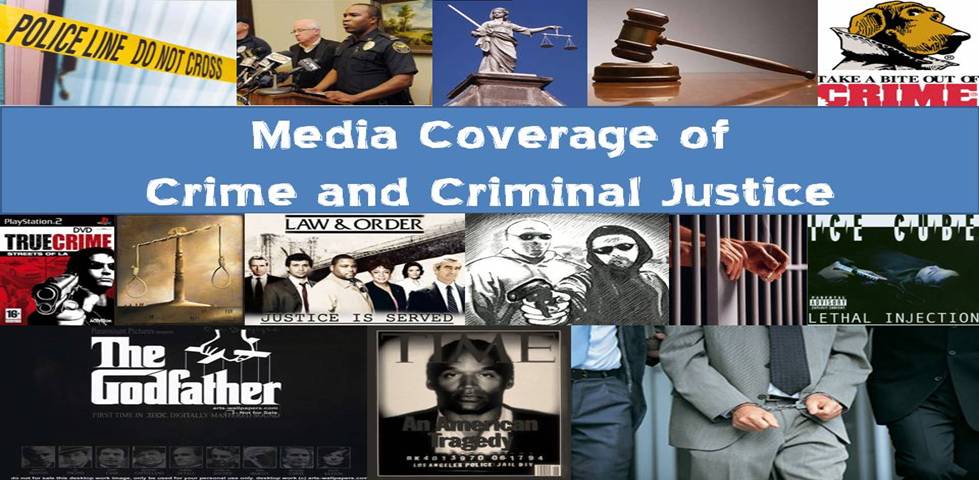
The literature is clear that the great bulk of images of police in the media are actually positive in nature. This is because the police maintain close relationships with the media to help control how they are depicted, also using press releases and press conferences, careful training and so on to help portray the "good side" of police officers and policing.
But obviously, negativity also sells in the media. So stories like this showing excessive use of force against a civilian tend to get a lot of press.
When you read the story and see other stories like this in the future, keep in mind how difficult of a job these people have, and how little they get paid to do it. This is not to justify such outrageous behavior, because clearly it is not justifiable. But for those of us who want to understand why it happens, it is not really that hard when you sit down and think about it.
Police officers see the ugly side of humanity every day. They deal with the crud of the Earth every day. And they are paid very little, respected very little, and often treated horribly by citizens who the officers are usually trying to help.
When they are doing all this, officers are expected not to take things personally. See?
But sometimes they do. And this is a clear case of that.
The good news is excessive use of force is actually very very rare. And the number one complaint for excessive use of force is simply that an officer touched someone when he or she did not need to ("He put his hand on me!"). So let's not lose that important real piece of information when we see such stories.
Tuesday, September 13, 2011
Militarization of the police after 9/11
It was bound to happen and probably not at all unexpected.
We already knew that after 9/11, resources were diverted away from white-collar and corporate crime investigations toward counter-terrorism efforts.
Now we are learning that police forces are increasingly becoming militarized.

There is a great article about it in Forbes and another at the Huffington Post.
Read them. Why?
Even the police are concerned!
For example, there is this from Joseph McNamara, who served as a police chief in both San Jose, California, and Kansas City, Missouri: "Simply put, the police culture in our country has changed ... An emphasis on 'officer safety' and paramilitary training pervades today's policing, in contrast to the older culture, which held that cops didn't shoot until they were about to be shot or stabbed ... Concern about such firepower in densely populated areas hitting innocent citizens has given way to an attitude that the police are fighting a war against drugs and crime and must be heavily armed."
And this from former Seattle Police Chief Norm Stamper: "We needed local police to play a legitimate, continuing role in furthering homeland security back in 2001 ... After all, the 9/11 terrorist attacks took place on specific police beats in specific police precincts. Instead, we got a 10-year campaign of increasing militarization, constitution-abusing tactics, needless violence and heartache as the police used federal funds, equipment, and training to ramp up the drug war. It's just tragic."
Hmmmm ...
Tuesday, January 25, 2011
Recent rash of police shootings nationwide

So says CNN.
In the book I show that stories about crime and criminal justice rarely offer important context. That is, they typically fail to show the important details needed to give the story meaning.
Here is an example of the opposite. Even the headline offers context:
"Dangers real, but deaths increasingly rare for police officers."
Exactly. It is a dangerous job. But officers are rarely killed on the job.
As noted in the article: "Police shootings are very, very rare events in this country," said Peter Manning, a professor at Northeastern University's College of Criminal Justice. "When they happen together (like this week), it's even rarer."
With this context -- if the news and entertainment media just showed cops being killed -- we'd all carry around misconceptions of the realities of police work.
Kudos to CNN for providing this context.
As for me this one hits way too close to home. Two officers in my hometown of St. Pete slaughtered in an ambush. It's a horribly sad day.
http://www.cnn.com/2011/CRIME/01/25/police.officers.shot/
Subscribe to:
Posts (Atom)