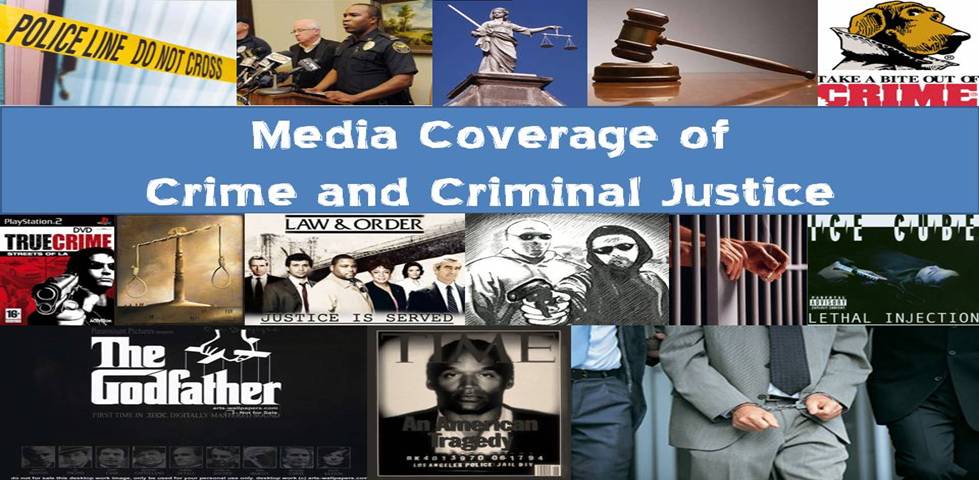
This is a story that just won't seem to go away.
And good thing, too, for it is an important one.
Yes, Blacks commit more than their fair share of (some forms of) crime. This is found to be true whether one uses police statistics, victimization surveys, or even contemporary self-report studies.
But their overrepresentation in criminal justice statistics is not justified just by higher involvement in crime. To my knowledge, there is no credible study that has even been able to explain that Blacks are more likely to be stopped, searched, arrested, and have force used again them more simply because they are more likely to break the law.
Studies in places like New York City, for example, find that people of color (i.e., Blacks and Latinos) make up about 90% of people being stopped and frisked by police, but they are no more likely to be found in possession of drugs or weapons. See here and here.
So today's article in The New Yorker titled, "The Color of Justice," is very important.
From the article:
"Few issues divide white and black Americans more sharply than criminal justice. A Pew Research Center poll
found that eighty per cent of African-Americans thought the Ferguson
case raised important racial issues; only thirty-seven per cent of
whites felt the same. And while fewer than one in five African-Americans
expressed confidence that the investigation of the shooting would be
fair, more than half of whites said that they had confidence in the
investigation.
"A report
issued today by the Sentencing Project, a nonprofit advocacy group,
confirms the old news that whites and blacks view the justice system
very differently, largely because of their different treatment by it.
The report’s real significance lies in its further contention that this
disparity in perceptions contributes to our astonishingly high
incarceration rate, the highest in the world.
"White Americans are
decidedly more punitive than African-Americans or Hispanics.
Sixty-three per cent of whites support the death penalty, as compared to
only thirty-six per cent of African-Americans and forty per cent of
Hispanics. Whites are also more supportive of other harsh measures,
including trying juveniles as adults and “three-strikes” laws. Blacks,
by contrast, are substantially more likely to support public investment
in education and job training as a crime-prevention measure. Since
whites are, for the time being, the majority of the polity, our laws
reflect their preferences; American criminal law is dominated by
mandatory minimum sentences, life sentences for minor offenses, and the
widespread abandonment of parole.
"What explains whites’ preference for harsh criminal laws? Crime
victims understandably might favor more punitive responses. But whites
are considerably less likely to be victims of crime, especially violent
crime: African-Americans are six times more likely than whites to die of
homicide. Crime has always been a more serious problem in areas of
concentrated urban poverty, and blacks more often live in such
neighborhoods. Yet despite their substantially lower vulnerability to
crime, whites are more likely than blacks to support punitive crime
policies.
"Some people charge that whites use the criminal-justice
system as a continuation of Jim Crow by other means. But the Sentencing
Project report makes a more subtle point. It finds that whites support
tougher criminal laws at least partly because they overestimate black
and Hispanic crime rates. Blacks and Hispanics do commit certain crimes
more frequently, per capita, than whites, but not all. But whites
consistently overestimate the difference, according to one study, by as
much as twenty to thirty per cent. That perception affects attitudes
toward offenders and sentencing. Studies show that the more whites
attribute higher crime rates to blacks and Hispanics, the more likely
they are to support harsh criminal laws. It is less that they are
consciously seeking to subordinate racial minorities than that they fail
to treat the negative consequences of high incarceration rates as their
problem. As the report explains, 'attributing crime to racial
minorities limits empathy toward offenders and encourages retribution.'
"This is a damning indictment. If anyone were to admit that they
preferred the death penalty, life without parole, or harsh sentences
because they believe the perpetrators of violent crimes are more likely
to be black or Hispanic, we would immediately condemn them as the worst
sort of racist. If a prosecutor, judge, or juror expressed such a
sentiment, any resulting conviction or sentence would be swiftly
overturned. No one admits that they feel this way, but the studies
recounted by the Sentencing Project suggest that this is precisely what
many white Americans feel."
It is called innocent bias or implicit bias or timid bigotry. Or just call it fear of the criminalblackman, as Dr. Kathryn Russell-Brown calls it.
This is newsworthy for sure.
Search This Blog
Showing posts with label new york city. Show all posts
Friday, September 5, 2014
Monday, August 11, 2014
"Broken Windows" in the news
You have likely heard of the theory, "Broken Windows," It asserts that signs of incivility, such as broken windows (but also graffiti, burned out and abandoned buildings, and the presence of untended people) attracts crime. Incivilities do so by sending a message to would-be criminals that this area is not cared about and thus not protected and thus easy to victimize!
Its founders were both conservatives, so it makes sense that the theory revolves around issues of order and disorder. After all, research shows that conservatives are hyper-sensitive to such issues, wanting things to be in their proper order.
Frankly, the theory is quite logical, and there is evidence that incivilities is linked to crime. Yet, as I showed in my book, Why Crime?, incivilities are as much an outcome of crime as a cause of it. Further, both are outcomes of larger social phenomena.
Policies resulting from the theory (e.g., aggressive stop and frisk and zero tolerance policing) have led to horrible outcomes, including racial disparities in policing as well as unjustifiable use of force by the police against often unarmed young men of color.
Yet, it is interesting that the theory's founders still support it. So indicates an article in the New York Times. In the article, one of the theory's founder, Professor Kelling, still defends the theory. At the same time, he sais that "stopping and frisking was 'overused; during the previous [city police] administration" as well as zero tolerance, which he described as “zealotry and no discretion — the opposite of what I tried to preach.”
I just wish there was more in the story as well as more in the news about the downsides of this theory as well as the police practices that emanate from it.
Tuesday, October 8, 2013
Remember Amadou Diallo? Race and policing in New York City!
Recently, the New York City Police Department released statistics for a single year pertaining to its controversial stop and frisk policies.
According to an article on officer.com, more than 31,000 people were stopped in 2011 and 97% of them were black or Hispanic!
People of color had long complained about this practice, and a judge found the policy to be unconstitutional.
New York Police Department Commissioner Ray Kelly said he was disturbed that the judge found Big Apple police engaged in racial profiling, saying that is "recklessly untrue."
"We do not engage in racial profiling," Kelly said. "It is prohibited by law, it is prohibited by our own regulations."
Mayor Michael Bloomberg said the city will appeal the ruling by a federal judge. Incredibly, in spite of the evidence--which shows that police rarely find weapons or drugs or make an arrest in cases where they stop and frisk someone--Bloomberg said the policy is "an important part of [the NYPD's] record of success." See the reality here.
I've been following this story since way way back in the day.
In New York City, police have always used race as a warning sign of potential danger to profile people. Not all cops of course, but enough to create major disparities in stops and even use of force.
Remember the case of Amadou Diallo, followed then shot and killed because he (an innocent man with nothing but a wallet in his back pocket) fit the description of a suspect (why? because he was black?)? There have been far too many of these cases in the city.
Many people have forgotten. Some have not.
Like my man, Ziggy Marley. Check out his song, "I know you don't care about me." Nice use of music to make a point.
"I know you don't care about me. I'm just a nigga' walking down the street."
...
"And they say their Constitution's for the benefit of all. It's all a lie. It's all a lie."
And read Michelle Alexander's book, The New Jim Crow. Her argument? Criminal justice--especially mass incarceration--is the new Jim Crow. Woah!
Tuesday, June 4, 2013
You wanna see a REAL scandal?
You've heard, depending on your news choice, about the so-called scandals of the Obama Adminstration when it comes to Benghazi, the IRS, and investigating journalists.
If not, Google it!
In my opinion, each of those "scandals" has a reasonable explanation indicative of something other than bad blood or vindictiveness or achieving some political ideology.
Of course I could be wrong.
But here is a true scandal of the Obama Adminstration. In cities all over the nation, including New York, young black males are being rounded up for a relatively minor behavior that Obama himself engaged in on a regular basis as a younger man (smoking or possessing marijuana).
In this article from the New York Times titled "Blacks Are Singled Out for Marijuana Arrests, Federal Data Suggests," the story reports: "Black Americans were nearly four times as likely as whites to be arrested on charges of marijuana possession in 2010, even though the two groups used the drug at similar rates, according to new federal data."
So why is this not being treated as a scandal, even as we know that the drug war has been a massive failure and is having such destrimental effects on the least advantaged people in the country? And how come no one is all upset about it on Fox News?
Monday, August 27, 2012
Who covers the war on drugs?
I was going to blog today about the story in New York City where the police shot 9 unarmed people in their effort to shoot and kill one armed man. The New York Times even ran it as a front page story, featuring a version of this shocking photo on their paper's first page:
There is so much here to discuss, touching upon many issues in the book.
But then I got a call today from the Huffington Post, and they are devoting coverage to the Republican National Convention starting tomorrow. One angle they are taking is policies that Republicans are not talking about (the "Shadow Convention" or something like that).
One of those policies is the drug war.
And guess who is being interviewed LIVE (web interview of course) alongside others including Mr. Michael Steele (former RNC Chairman)??? Yep, me!
Wow, live at 12:30pm tomorrow on http:// live.huffingtonpost.com/
So tune in and you'll hear some serious people discussing a serious issue that is NOT being covered by most mainstream media outlets!
But then I got a call today from the Huffington Post, and they are devoting coverage to the Republican National Convention starting tomorrow. One angle they are taking is policies that Republicans are not talking about (the "Shadow Convention" or something like that).
One of those policies is the drug war.
And guess who is being interviewed LIVE (web interview of course) alongside others including Mr. Michael Steele (former RNC Chairman)??? Yep, me!
Wow, live at 12:30pm tomorrow on http://
So tune in and you'll hear some serious people discussing a serious issue that is NOT being covered by most mainstream media outlets!
Monday, May 14, 2012
Good thing racial profiling is a myth, right?
Police officers stopped people on New York City’s streets more than
200,000 times during the first three months of 2012, putting the
Bloomberg administration on course to shatter a record set last year for
the highest annual tally of street stops.
Data on the 203,500 street stops from January through March — up from
183,326 during the same quarter a year earlier — was sent to the City
Council from 1 Police Plaza late on Friday under a legal requirement
spawned by public outrage over the 1999 fatal police shooting in the Bronx of Amadou Diallo, an unarmed black street peddler.
On Saturday, the department disclosed the information to reporters and
credited the controversial topic known as “Stop, Question, Frisk” as one
of several policies of engagement whose effectiveness was vindicated by
a decline in homicides in New York.
So far this year, 129 people have been murdered in New York through
Friday, the 132nd day of the year, a number that put the city on track
for a new low in annual homicides. The 471
murders logged by the Police Department in 2009 was the lowest annual
tally for any previous 12-month period since reliable numbers were kept
in the early 1960s.
Still, the new street-stop numbers got a fresh round of criticism after a week that saw civil libertarians and prospective mayoral candidates
debating the crime-suppression value of such stops and blaming the
tactics for tearing at the fabric of city life, particularly in minority
neighborhoods, during a period of historically low violence.
On Wednesday, the New York Civil Liberties Union issued a study
of last year’s stop data, arguing that far too many innocent people
were suffering under the policy. The study said that while young black
and Hispanic men made up 4.7 percent of the city’s population, those
between the ages of 14 and 24 accounted for 41.6 percent of stops in
2011.
Driving while black. Walking while black. Whatever you want to call it. It is real.
Interestingly, police department officials claim it is saving lives. Check the data and see for yourself.
Subscribe to:
Posts (Atom)


