This is a story that just won't seem to go away.
And good thing, too, for it is an important one.
Yes, Blacks commit more than their fair share of (some forms of) crime. This is found to be true whether one uses police statistics, victimization surveys, or even contemporary self-report studies.
But their overrepresentation in criminal justice statistics is not justified just by higher involvement in crime. To my knowledge, there is no credible study that has even been able to explain that Blacks are more likely to be stopped, searched, arrested, and have force used again them more simply because they are more likely to break the law.
Studies in places like New York City, for example, find that people of color (i.e., Blacks and Latinos) make up about 90% of people being stopped and frisked by police, but they are no more likely to be found in possession of drugs or weapons. See here and here.
So today's article in The New Yorker titled, "The Color of Justice," is very important.
From the article:
"Few issues divide white and black Americans more sharply than criminal justice. A Pew Research Center poll
found that eighty per cent of African-Americans thought the Ferguson
case raised important racial issues; only thirty-seven per cent of
whites felt the same. And while fewer than one in five African-Americans
expressed confidence that the investigation of the shooting would be
fair, more than half of whites said that they had confidence in the
investigation.
"A report
issued today by the Sentencing Project, a nonprofit advocacy group,
confirms the old news that whites and blacks view the justice system
very differently, largely because of their different treatment by it.
The report’s real significance lies in its further contention that this
disparity in perceptions contributes to our astonishingly high
incarceration rate, the highest in the world.
"White Americans are
decidedly more punitive than African-Americans or Hispanics.
Sixty-three per cent of whites support the death penalty, as compared to
only thirty-six per cent of African-Americans and forty per cent of
Hispanics. Whites are also more supportive of other harsh measures,
including trying juveniles as adults and “three-strikes” laws. Blacks,
by contrast, are substantially more likely to support public investment
in education and job training as a crime-prevention measure. Since
whites are, for the time being, the majority of the polity, our laws
reflect their preferences; American criminal law is dominated by
mandatory minimum sentences, life sentences for minor offenses, and the
widespread abandonment of parole.
"What explains whites’ preference for harsh criminal laws? Crime
victims understandably might favor more punitive responses. But whites
are considerably less likely to be victims of crime, especially violent
crime: African-Americans are six times more likely than whites to die of
homicide. Crime has always been a more serious problem in areas of
concentrated urban poverty, and blacks more often live in such
neighborhoods. Yet despite their substantially lower vulnerability to
crime, whites are more likely than blacks to support punitive crime
policies.
"Some people charge that whites use the criminal-justice
system as a continuation of Jim Crow by other means. But the Sentencing
Project report makes a more subtle point. It finds that whites support
tougher criminal laws at least partly because they overestimate black
and Hispanic crime rates. Blacks and Hispanics do commit certain crimes
more frequently, per capita, than whites, but not all. But whites
consistently overestimate the difference, according to one study, by as
much as twenty to thirty per cent. That perception affects attitudes
toward offenders and sentencing. Studies show that the more whites
attribute higher crime rates to blacks and Hispanics, the more likely
they are to support harsh criminal laws. It is less that they are
consciously seeking to subordinate racial minorities than that they fail
to treat the negative consequences of high incarceration rates as their
problem. As the report explains, 'attributing crime to racial
minorities limits empathy toward offenders and encourages retribution.'
"This is a damning indictment. If anyone were to admit that they
preferred the death penalty, life without parole, or harsh sentences
because they believe the perpetrators of violent crimes are more likely
to be black or Hispanic, we would immediately condemn them as the worst
sort of racist. If a prosecutor, judge, or juror expressed such a
sentiment, any resulting conviction or sentence would be swiftly
overturned. No one admits that they feel this way, but the studies
recounted by the Sentencing Project suggest that this is precisely what
many white Americans feel."
It is called innocent bias or implicit bias or timid bigotry. Or just call it fear of the criminalblackman, as Dr. Kathryn Russell-Brown calls it.
This is newsworthy for sure.
Search This Blog
Showing posts with label police. Show all posts
Friday, September 5, 2014
Monday, August 25, 2014
How Often are Unarmed Black Men Shot Down By Police?
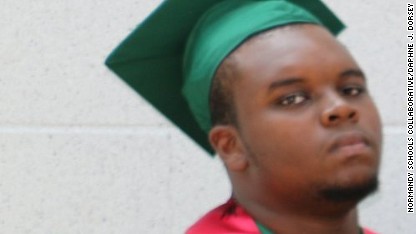
This is a question that is now being asked by the media (finally), in the wake of the shooting of unarmed Michael Brown in Ferguson, Missouri.
Here's an example from the DailyKos.
From the article, an exhaustive review of the available data:
"If the use of kicking, punching, tasering and pointing guns at citizens is felt to be excessive an average of 74% of the time - and is Three Times Higher for Black People - just what would the percentages of unjustified, excessive uses of deadly force really be like if we had those numbers?
Could it be as high as 80%, 90%?
"Could it be so bad that the obviousness of it all would be plain for all to see? Just how bad is it? Maybe that's why, with all this number crunching already being provided by the BJS and Police
Departments and the FBI - we still don't have that. one. strategic. figure.
"Somehow I don't think that's a coincidence."
What we do know is that police are more likely to stop a black person, detain a black person, question a black person, search a black person, arrest a black person, use force against a black person, and use excessive force against a black person. Perhaps the rest is obvious.
And while I still will not draw any conclusions about the officer in this case, until all the facts are known ... there is this!
Tuesday, August 19, 2014
Interesting discussion about the Ferguson, Missouri PD
The lethal shooting of an unarmed young black man (again!) by a police officer--this time in Ferguson, MO--has of course been all over the news.
I am not passing judgment on the case because all the facts are not out.
Yet, I have stated that it does have something to do with the unbelievable militarization of the police. And of course it has something to do with stereotypes of crime rooted in the law and the media.
And most recently I said this: "By law, the amount of force that CAN be reasonably used is determined by the behavior of the suspect. If a person is not armed and is not using force that can lead to serious injury or death, he or she CANNOT be shot dead."
Yet, a police officer friend of mine replied: "Actually yes, by law they can. The law is interpreted that if the officer is in fear for his/her life....it's been done before and the media has not blown up about it....it is the same for a citizen."
And this really shook me up. Why?
Because it means that if a police officer is afraid, he or she can kill someone, even if the reason he or she is afraid has its roots in racism.
As shown in the book, the media create the impression that black people--and young black men in particular--are dangerous and thus scary. So when one runs at you or refuses to back down, you are now justified in shooting them? Even if the only reason you are afraid is because you have been constantly bombarded with images of dangerous black men over the course of your entire life?
Monday, August 18, 2014
Reportedly shot multiple times in broad daylight with his hands up?
This explains the intense media coverage of it, no?
Missouri gov sends National Guard to Ferguson after latest night of clashes
KURTZ: How reporters are driving the murky story — sometimes too fast
VIDEOS: Second Michael Brown autopsy raises new questions
| Media maelstrom in Ferguson 
VIDEOS: Is Al Sharpton raising tensions in Ferguson?
| Politics at play in Michael Brown probe? 
VIDEOS: Should all police officers carry body cameras?
| Mo. governor calls on National Guard for aid 
VIDEOS: Dr. Baden explains autopsy
| Dr. Ben Carson on black leaders' role in crisis
BREAKING NEWS
Governor calls in National Guard
An independent autopsy conducted for the Brown family says the teen was shot twice in the head and four times in the right arm, all to the front of his body. FULL STORY
- NEW Video of scene
| Photos - Autopsy unlikely to offer clarity
- Nixon: Cops were 'aggressive'
- CNN producer: Shots fired at cops
A GRAPHIC AND DISTURBING YOUTUBE VIDEO apparently taken in the immediate aftermath of the fatal shooting of Michael Brown by Ferguson, Mo., Police Officer Darren Wilson purportedly has a witness possibly corroborating the officer's account — casting doubt on claims that Brown was shot while running away, his hands in the air.
Tuesday, October 8, 2013
Remember Amadou Diallo? Race and policing in New York City!
Recently, the New York City Police Department released statistics for a single year pertaining to its controversial stop and frisk policies.
According to an article on officer.com, more than 31,000 people were stopped in 2011 and 97% of them were black or Hispanic!
People of color had long complained about this practice, and a judge found the policy to be unconstitutional.
New York Police Department Commissioner Ray Kelly said he was disturbed that the judge found Big Apple police engaged in racial profiling, saying that is "recklessly untrue."
"We do not engage in racial profiling," Kelly said. "It is prohibited by law, it is prohibited by our own regulations."
Mayor Michael Bloomberg said the city will appeal the ruling by a federal judge. Incredibly, in spite of the evidence--which shows that police rarely find weapons or drugs or make an arrest in cases where they stop and frisk someone--Bloomberg said the policy is "an important part of [the NYPD's] record of success." See the reality here.
I've been following this story since way way back in the day.
In New York City, police have always used race as a warning sign of potential danger to profile people. Not all cops of course, but enough to create major disparities in stops and even use of force.
Remember the case of Amadou Diallo, followed then shot and killed because he (an innocent man with nothing but a wallet in his back pocket) fit the description of a suspect (why? because he was black?)? There have been far too many of these cases in the city.
Many people have forgotten. Some have not.
Like my man, Ziggy Marley. Check out his song, "I know you don't care about me." Nice use of music to make a point.
"I know you don't care about me. I'm just a nigga' walking down the street."
...
"And they say their Constitution's for the benefit of all. It's all a lie. It's all a lie."
And read Michelle Alexander's book, The New Jim Crow. Her argument? Criminal justice--especially mass incarceration--is the new Jim Crow. Woah!
Friday, May 31, 2013
"It makes me feel sad"
That is what a 14 year old black kid said after he was tackled by the police after supposedly giving them a bad look.
But it should make him (and you) feel outraged.
The logical outcome of the law defining some acts as crimes (i.e., street crimes) while ignoring others (i.e., white collar and corporate crimes) and the media focusing on some people (i.e., people of color) while ignoring others (i.e., whites) is that we, as a nation, see crime as a black thing, even though in reality it is white people who do the vast majority of damage to us.
There is a ton of research on this by the way. Just Google "Travis Dixon" and "race" and "crime" ...
This king of thing--a 14 year old black kid holding his puppy getting tackled by the police--can only happen in a society whose institutions (i.e., the law and the media) have defined blackness as criminal.
http://www.alternet.org/civil-liberties/black-14-year-old-carrying-puppy-tackled-and-choked-police-giving-them-funny-look
Think about it:
1) Who makes the law? White, old, rich men (WORMs).
2) Who owns the media? White, old, rich men (WORMs).
Who is seen as dangerous? Poor, young men of color.
And who is not?
White, old, rich men (WORMs).
Coincidence?
Tuesday, January 8, 2013
When can police stop and frisk you?
For years they've been doing it, even with increasing frequency.
But only in some places. And against some people.
Which is why many have alleged it is being used to engage in racial profiling.
For example, the New York City Civil Liberties Union claims that, from 2002 to 2011, black and Latino residents made up close to 90 percent of people stopped, and about 88 percent of stops – more than 3.8 million – were of innocent New Yorkers. Even in neighborhoods that are predominantly white, black and Latino New Yorkers face the disproportionate brunt. For example, in 2011, Black and Latino New Yorkers made up 24 percent of the population in Park Slope, but 79 percent of stops. This, on its face, is discriminatory.
So I don't find it surprising that a key part of the NYPD’s controversial “stop and frisk” tactic has been ruled unconstitutional. From NY Daily News:
Manhattan Federal Court Judge Shira Scheindlin ordered police to refrain from making trespass stops outside private residential buildings — even though the landlord has given officers permission to do so as part of the NYPD’s “Clean Halls” program.
"While it may be difficult to say when precisely to draw the line between constitutional and unconstitutional police encounters such a line exists, and the NYPD has systematically crossed it when making trespass stops outside buildings," Scheindlin wrote in a 157-page ruling.
The New York Civil Liberties Union argued in an eight-day hearing in October that “Clean Halls,” which exists only in the Bronx, leads to people being hassled by cops and sometimes cuffed near their own abode for no legitimate reason.
Read more: http://www.nydailynews.com/new-york/nypd-controversial-stop-frisk-policy-ruled-unconstitutional-article-1.1235578#ixzz2HPV2AwdC
Thursday, May 10, 2012
Um, ya' think?
Ruben Navarrette: The police who are accused of beating Kelly Thomas to death need to be treated the same as any alleged killers -- prosecuted, and if convicted, sent to prison.
FULL STORY | OFFICERS TO STAND TRIAL
So why is this so controversial in the first place?
Subscribe to:
Posts (Atom)


YouTube