This is a story that just won't seem to go away.
And good thing, too, for it is an important one.
Yes, Blacks commit more than their fair share of (some forms of) crime. This is found to be true whether one uses police statistics, victimization surveys, or even contemporary self-report studies.
But their overrepresentation in criminal justice statistics is not justified just by higher involvement in crime. To my knowledge, there is no credible study that has even been able to explain that Blacks are more likely to be stopped, searched, arrested, and have force used again them more simply because they are more likely to break the law.
Studies in places like New York City, for example, find that people of color (i.e., Blacks and Latinos) make up about 90% of people being stopped and frisked by police, but they are no more likely to be found in possession of drugs or weapons. See here and here.
So today's article in The New Yorker titled, "The Color of Justice," is very important.
From the article:
"Few issues divide white and black Americans more sharply than criminal justice. A Pew Research Center poll
found that eighty per cent of African-Americans thought the Ferguson
case raised important racial issues; only thirty-seven per cent of
whites felt the same. And while fewer than one in five African-Americans
expressed confidence that the investigation of the shooting would be
fair, more than half of whites said that they had confidence in the
investigation.
"A report
issued today by the Sentencing Project, a nonprofit advocacy group,
confirms the old news that whites and blacks view the justice system
very differently, largely because of their different treatment by it.
The report’s real significance lies in its further contention that this
disparity in perceptions contributes to our astonishingly high
incarceration rate, the highest in the world.
"White Americans are
decidedly more punitive than African-Americans or Hispanics.
Sixty-three per cent of whites support the death penalty, as compared to
only thirty-six per cent of African-Americans and forty per cent of
Hispanics. Whites are also more supportive of other harsh measures,
including trying juveniles as adults and “three-strikes” laws. Blacks,
by contrast, are substantially more likely to support public investment
in education and job training as a crime-prevention measure. Since
whites are, for the time being, the majority of the polity, our laws
reflect their preferences; American criminal law is dominated by
mandatory minimum sentences, life sentences for minor offenses, and the
widespread abandonment of parole.
"What explains whites’ preference for harsh criminal laws? Crime
victims understandably might favor more punitive responses. But whites
are considerably less likely to be victims of crime, especially violent
crime: African-Americans are six times more likely than whites to die of
homicide. Crime has always been a more serious problem in areas of
concentrated urban poverty, and blacks more often live in such
neighborhoods. Yet despite their substantially lower vulnerability to
crime, whites are more likely than blacks to support punitive crime
policies.
"Some people charge that whites use the criminal-justice
system as a continuation of Jim Crow by other means. But the Sentencing
Project report makes a more subtle point. It finds that whites support
tougher criminal laws at least partly because they overestimate black
and Hispanic crime rates. Blacks and Hispanics do commit certain crimes
more frequently, per capita, than whites, but not all. But whites
consistently overestimate the difference, according to one study, by as
much as twenty to thirty per cent. That perception affects attitudes
toward offenders and sentencing. Studies show that the more whites
attribute higher crime rates to blacks and Hispanics, the more likely
they are to support harsh criminal laws. It is less that they are
consciously seeking to subordinate racial minorities than that they fail
to treat the negative consequences of high incarceration rates as their
problem. As the report explains, 'attributing crime to racial
minorities limits empathy toward offenders and encourages retribution.'
"This is a damning indictment. If anyone were to admit that they
preferred the death penalty, life without parole, or harsh sentences
because they believe the perpetrators of violent crimes are more likely
to be black or Hispanic, we would immediately condemn them as the worst
sort of racist. If a prosecutor, judge, or juror expressed such a
sentiment, any resulting conviction or sentence would be swiftly
overturned. No one admits that they feel this way, but the studies
recounted by the Sentencing Project suggest that this is precisely what
many white Americans feel."
It is called innocent bias or implicit bias or timid bigotry. Or just call it fear of the criminalblackman, as Dr. Kathryn Russell-Brown calls it.
This is newsworthy for sure.
Search This Blog
Showing posts with label race. Show all posts
Friday, September 5, 2014
Monday, August 25, 2014
How Often are Unarmed Black Men Shot Down By Police?
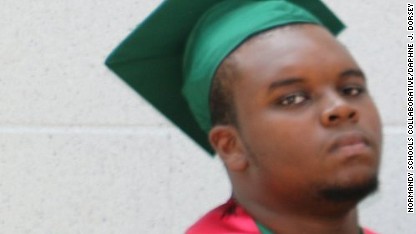
This is a question that is now being asked by the media (finally), in the wake of the shooting of unarmed Michael Brown in Ferguson, Missouri.
Here's an example from the DailyKos.
From the article, an exhaustive review of the available data:
"If the use of kicking, punching, tasering and pointing guns at citizens is felt to be excessive an average of 74% of the time - and is Three Times Higher for Black People - just what would the percentages of unjustified, excessive uses of deadly force really be like if we had those numbers?
Could it be as high as 80%, 90%?
"Could it be so bad that the obviousness of it all would be plain for all to see? Just how bad is it? Maybe that's why, with all this number crunching already being provided by the BJS and Police
Departments and the FBI - we still don't have that. one. strategic. figure.
"Somehow I don't think that's a coincidence."
What we do know is that police are more likely to stop a black person, detain a black person, question a black person, search a black person, arrest a black person, use force against a black person, and use excessive force against a black person. Perhaps the rest is obvious.
And while I still will not draw any conclusions about the officer in this case, until all the facts are known ... there is this!
Here's an example from the DailyKos.
From the article, an exhaustive review of the available data:
"If the use of kicking, punching, tasering and pointing guns at citizens is felt to be excessive an average of 74% of the time - and is Three Times Higher for Black People - just what would the percentages of unjustified, excessive uses of deadly force really be like if we had those numbers?
Could it be as high as 80%, 90%?
"Could it be so bad that the obviousness of it all would be plain for all to see? Just how bad is it? Maybe that's why, with all this number crunching already being provided by the BJS and Police
Departments and the FBI - we still don't have that. one. strategic. figure.
"Somehow I don't think that's a coincidence."
What we do know is that police are more likely to stop a black person, detain a black person, question a black person, search a black person, arrest a black person, use force against a black person, and use excessive force against a black person. Perhaps the rest is obvious.
And while I still will not draw any conclusions about the officer in this case, until all the facts are known ... there is this!
Tuesday, August 19, 2014
Interesting discussion about the Ferguson, Missouri PD
The lethal shooting of an unarmed young black man (again!) by a police officer--this time in Ferguson, MO--has of course been all over the news.
I am not passing judgment on the case because all the facts are not out.
Yet, I have stated that it does have something to do with the unbelievable militarization of the police. And of course it has something to do with stereotypes of crime rooted in the law and the media.
And most recently I said this: "By law, the amount of force that CAN be reasonably used is determined by the behavior of the suspect. If a person is not armed and is not using force that can lead to serious injury or death, he or she CANNOT be shot dead."
Yet, a police officer friend of mine replied: "Actually yes, by law they can. The law is interpreted that if the officer is in fear for his/her life....it's been done before and the media has not blown up about it....it is the same for a citizen."
And this really shook me up. Why?
Because it means that if a police officer is afraid, he or she can kill someone, even if the reason he or she is afraid has its roots in racism.
As shown in the book, the media create the impression that black people--and young black men in particular--are dangerous and thus scary. So when one runs at you or refuses to back down, you are now justified in shooting them? Even if the only reason you are afraid is because you have been constantly bombarded with images of dangerous black men over the course of your entire life?
I am not passing judgment on the case because all the facts are not out.
Yet, I have stated that it does have something to do with the unbelievable militarization of the police. And of course it has something to do with stereotypes of crime rooted in the law and the media.
And most recently I said this: "By law, the amount of force that CAN be reasonably used is determined by the behavior of the suspect. If a person is not armed and is not using force that can lead to serious injury or death, he or she CANNOT be shot dead."
Yet, a police officer friend of mine replied: "Actually yes, by law they can. The law is interpreted that if the officer is in fear for his/her life....it's been done before and the media has not blown up about it....it is the same for a citizen."
And this really shook me up. Why?
Because it means that if a police officer is afraid, he or she can kill someone, even if the reason he or she is afraid has its roots in racism.
As shown in the book, the media create the impression that black people--and young black men in particular--are dangerous and thus scary. So when one runs at you or refuses to back down, you are now justified in shooting them? Even if the only reason you are afraid is because you have been constantly bombarded with images of dangerous black men over the course of your entire life?
Monday, August 18, 2014
Reportedly shot multiple times in broad daylight with his hands up?
This explains the intense media coverage of it, no?
Missouri gov sends National Guard to Ferguson after latest night of clashes
KURTZ: How reporters are driving the murky story — sometimes too fast
VIDEOS: Second Michael Brown autopsy raises new questions
| Media maelstrom in Ferguson 
VIDEOS: Is Al Sharpton raising tensions in Ferguson?
| Politics at play in Michael Brown probe? 
VIDEOS: Should all police officers carry body cameras?
| Mo. governor calls on National Guard for aid 
VIDEOS: Dr. Baden explains autopsy
| Dr. Ben Carson on black leaders' role in crisis
BREAKING NEWS
Governor calls in National Guard
An independent autopsy conducted for the Brown family says the teen was shot twice in the head and four times in the right arm, all to the front of his body. FULL STORY
- NEW Video of scene
| Photos - Autopsy unlikely to offer clarity
- Nixon: Cops were 'aggressive'
- CNN producer: Shots fired at cops
A GRAPHIC AND DISTURBING YOUTUBE VIDEO apparently taken in the immediate aftermath of the fatal shooting of Michael Brown by Ferguson, Mo., Police Officer Darren Wilson purportedly has a witness possibly corroborating the officer's account — casting doubt on claims that Brown was shot while running away, his hands in the air.
Monday, June 2, 2014
Stories you usually do not see in the news!
To the credit of these media organizations, they are focusing, finally, on criminal justice issues that have long deserved our attention. For example:
End Mass Incarceration Now (NY Times)
In this op-ed, the editors argue that imprisonment does not work to reduce crime, that it is too financially costly, and that it imposes other costs to society (including racial biases).
Related to this op-ed is this story:
A Modern Day Slave Plantation Exists, and It's Thriving in the Heart of America (PolicyMic)
This article shows how race continues to impact criminal justice practice.
From the article:
"Angola sits 50 miles northwest of Baton Rouge. It's the largest maximum-security facility in the United States and one of the country's most notorious prisons. In the book The Life and Legend of Leadbelly, the authors wrote, 'Tough criminals allegedly broke down when they received a sentence to Angola. ... None of them wanted to be sent to a prison where 1 of every 10 inmates annually received stab wounds and which routinely seethed with black-white confrontations.'
"Angola's expanse covers a vast 28 square miles — larger than the size of Manhattan. Tucked away in a bend of the Mississippi River, it's surrounded by water and swamp on three sides. It's an isolated penal village — the nearest town 30 miles away — and it's the only penitentiary in the country where staff members live on site. Generation after generation grow up, live and die on Angola's land.
...Of about 6,000 inmates currently in custody, roughly 70% are black and 30% are white. In October 2008, NPR reported, 'In the distance on this day, 100 black men toil, bent over in the field, while a single white officer on a horse sits above them, a shotgun in his lap.'"
It looks like this:
And then there is this gem:
How to Stop Violence (Slate)
In this article, the author suggests that it is not mental illness that produces mass violence. Instead, it is emotion, and especially anger:
"In a summary of studies on murder and prior record of violence, Don Kates and Gary Mauser found that 80 to 90 percent of murderers had prior police records, in contrast to 15 percent of American adults overall. In a study of domestic murderers, 46 percent of the perpetrators had had a restraining order against them at some time. Family murders are preceded by prior domestic violence more than 90 percent of the time. Violent crimes are committed by people who lack the skills to modulate anger, express it constructively, and move beyond it."
How refreshing to see stories of real import in the news media!
End Mass Incarceration Now (NY Times)
In this op-ed, the editors argue that imprisonment does not work to reduce crime, that it is too financially costly, and that it imposes other costs to society (including racial biases).
Related to this op-ed is this story:
A Modern Day Slave Plantation Exists, and It's Thriving in the Heart of America (PolicyMic)
This article shows how race continues to impact criminal justice practice.
From the article:
"Angola sits 50 miles northwest of Baton Rouge. It's the largest maximum-security facility in the United States and one of the country's most notorious prisons. In the book The Life and Legend of Leadbelly, the authors wrote, 'Tough criminals allegedly broke down when they received a sentence to Angola. ... None of them wanted to be sent to a prison where 1 of every 10 inmates annually received stab wounds and which routinely seethed with black-white confrontations.'
"Angola's expanse covers a vast 28 square miles — larger than the size of Manhattan. Tucked away in a bend of the Mississippi River, it's surrounded by water and swamp on three sides. It's an isolated penal village — the nearest town 30 miles away — and it's the only penitentiary in the country where staff members live on site. Generation after generation grow up, live and die on Angola's land.
...Of about 6,000 inmates currently in custody, roughly 70% are black and 30% are white. In October 2008, NPR reported, 'In the distance on this day, 100 black men toil, bent over in the field, while a single white officer on a horse sits above them, a shotgun in his lap.'"
It looks like this:
And then there is this gem:
How to Stop Violence (Slate)
In this article, the author suggests that it is not mental illness that produces mass violence. Instead, it is emotion, and especially anger:
"In a summary of studies on murder and prior record of violence, Don Kates and Gary Mauser found that 80 to 90 percent of murderers had prior police records, in contrast to 15 percent of American adults overall. In a study of domestic murderers, 46 percent of the perpetrators had had a restraining order against them at some time. Family murders are preceded by prior domestic violence more than 90 percent of the time. Violent crimes are committed by people who lack the skills to modulate anger, express it constructively, and move beyond it."
How refreshing to see stories of real import in the news media!
Thursday, May 22, 2014
What do you get when you cross Newt Gingrich, Van Jones, and CNN?
... a pretty good article, actually. The article titled, Prison system is failing America, starts:
"If Americans under correctional supervision counted as a city of their own, they would form the largest city in the United States after New York.
"The number of people in prison, on parole or on probation, 6.9 million Americans, exceeds the populations of the second- and third-largest cities, Los Angeles and Chicago, combined. Or the size of the next four -- Houston, Philadelphia, Phoenix and San Antonio -- put together."
It then goes on to cover the racial biases in prisons, the high recidivism rate for offenders, the high cost to taxpayers, and more importantly, policies and programs ew can pursue to bring about real change.
Check it out.
Tuesday, October 8, 2013
Remember Amadou Diallo? Race and policing in New York City!
Recently, the New York City Police Department released statistics for a single year pertaining to its controversial stop and frisk policies.
According to an article on officer.com, more than 31,000 people were stopped in 2011 and 97% of them were black or Hispanic!
People of color had long complained about this practice, and a judge found the policy to be unconstitutional.
New York Police Department Commissioner Ray Kelly said he was disturbed that the judge found Big Apple police engaged in racial profiling, saying that is "recklessly untrue."
"We do not engage in racial profiling," Kelly said. "It is prohibited by law, it is prohibited by our own regulations."
Mayor Michael Bloomberg said the city will appeal the ruling by a federal judge. Incredibly, in spite of the evidence--which shows that police rarely find weapons or drugs or make an arrest in cases where they stop and frisk someone--Bloomberg said the policy is "an important part of [the NYPD's] record of success." See the reality here.
I've been following this story since way way back in the day.
In New York City, police have always used race as a warning sign of potential danger to profile people. Not all cops of course, but enough to create major disparities in stops and even use of force.
Remember the case of Amadou Diallo, followed then shot and killed because he (an innocent man with nothing but a wallet in his back pocket) fit the description of a suspect (why? because he was black?)? There have been far too many of these cases in the city.
Many people have forgotten. Some have not.
Like my man, Ziggy Marley. Check out his song, "I know you don't care about me." Nice use of music to make a point.
"I know you don't care about me. I'm just a nigga' walking down the street."
...
"And they say their Constitution's for the benefit of all. It's all a lie. It's all a lie."
And read Michelle Alexander's book, The New Jim Crow. Her argument? Criminal justice--especially mass incarceration--is the new Jim Crow. Woah!
According to an article on officer.com, more than 31,000 people were stopped in 2011 and 97% of them were black or Hispanic!
People of color had long complained about this practice, and a judge found the policy to be unconstitutional.
New York Police Department Commissioner Ray Kelly said he was disturbed that the judge found Big Apple police engaged in racial profiling, saying that is "recklessly untrue."
"We do not engage in racial profiling," Kelly said. "It is prohibited by law, it is prohibited by our own regulations."
Mayor Michael Bloomberg said the city will appeal the ruling by a federal judge. Incredibly, in spite of the evidence--which shows that police rarely find weapons or drugs or make an arrest in cases where they stop and frisk someone--Bloomberg said the policy is "an important part of [the NYPD's] record of success." See the reality here.
I've been following this story since way way back in the day.
In New York City, police have always used race as a warning sign of potential danger to profile people. Not all cops of course, but enough to create major disparities in stops and even use of force.
Remember the case of Amadou Diallo, followed then shot and killed because he (an innocent man with nothing but a wallet in his back pocket) fit the description of a suspect (why? because he was black?)? There have been far too many of these cases in the city.
Many people have forgotten. Some have not.
Like my man, Ziggy Marley. Check out his song, "I know you don't care about me." Nice use of music to make a point.
"I know you don't care about me. I'm just a nigga' walking down the street."
...
"And they say their Constitution's for the benefit of all. It's all a lie. It's all a lie."
And read Michelle Alexander's book, The New Jim Crow. Her argument? Criminal justice--especially mass incarceration--is the new Jim Crow. Woah!
Tuesday, September 24, 2013
Race, the war on drugs, and incarceration
Here are some undeniable facts about criminal justice in the United States:
1) The US leads the world in the rate of imprisonment, as well as the number of people it incarcerates.
2) This is not because we have more crime. US crime rates are average in comparison to other industrialized nations (although our murder rate is above average and our handgun murder rate is out of this world).
3) African Americans and Hispanics are disproportionately likely to be incarcerated and in fact now make up the majority of people imprisoned in the US.
4) This is in part due to their higher involvement with certain crimes, most notably robbery and murder. That greater involvement is not due to some genetic or even cultural difference between whites and people of color, but can largely be explained by social class differences--i.e., people of color are more likely to be poor, unemployed or underemployed, and facing significant and cumulative life disadvantages.
5) Yet, the main reason that people of color disproportionately likely to be incarcerated and make up the majority of people imprisoned in the US is because of bias in American institutions, most notably the law (which defines their harmful acts as crimes and especially serious crimes while simultaneously ignoring harmful acts of the wealthy) and the mainstream media (which intensely focuses its attention on crimes committed by people of color, especially poor people of color against "innocent" whites while simultaneously ignoring harmful acts of the powerful).
Yes, the criminal justice system is biased. Take the war on drugs as one example. Biased, biased, biased (even the White House now sees it!). And people are finally starting to see it, even in the media. Here is an example of a recent story from MSNBC that proves the point:
Criminal injustice: The percentage of African-Americans in prison
Michelle Alexander, the civil rights lawyer turned author, says this is in part because America’s criminal justice system perpetuates racial inequities.
“After years of representing victims of racial profiling and police brutality, and investigating patterns of drug law enforcement, and trying to help people who were released from prison face one barrier, one legal roadblock after another to get a job, getting access to housing, getting even food stamps–you know, I had an awakening that our criminal justice system now functions more like a system of racial and social control, than a system of crime prevention or control,” Alexander said on PoliticsNation Monday.
“Our nation’s prison population has more than quintupled,” she said. “And this is due largely to the war on drugs and the ‘get tough’ movement. The drug war has been waged almost exclusively in poor communities of color even though studies have consistently shown now for decades that contrary to popular belief, people of color are no more likely to use or sell illegal drugs than whites, but by waging this drug war almost exclusively in poor communities of color, we’ve now created a vast new racial under-caste.”
Since 1971, when President Richard Nixon declared a war on drugs, there has been a 700% increase in the U.S. prison population. Today, African-Americans are also more likely to spend time in prison for drug related offenses than their white counterparts. According to the Sentencing Project, African-Americans make up 12% of the nation’s drug users, but represent 34% of those arrested for drug offenses, and 45% of those in state prison for such offense as of 2005.
In her book, “The New Jim Crow: Mass Incarceration in the Age of Colorblindness,” Alexander chronicled how black youth are less likely to be drug users. White students use cocaine and heroin at seven times the rate of black students, and use crack at eight times the rate, according to a study from the National Institute on Drug Abuse.
Eugene Jarecki, filmmaker behind the documentary “The House I Live in,” thinks that Americans have been swindled into believing these higher incarceration rates among minorities are justified by drug use.
“We lived for a very long time with the idea that crack is a black drug and powder is a white drug, and the actual facts that I discovered when I made the film is that crack was never a black drug,” he said. “The majority of crack users in the United States of America are and always have been white.”
“Once you know that fact, it reminds you how much propaganda has hoodwinked us for 40 years about these drugs,” he added. As of 2002, more than 80% of Americans sentenced under federal crack cocaine laws were African-Americans, according to the Sentencing Project, which also has found black drug offenders have a 20% greater chance of being sentenced to prison than white drug offenders, while Hispanics has a 40% greater chance.
Jarecki applauds the Obama administration for taking steps to help mend the program, referring to the Justice Department’s recent push to stop pursuing charges on low level drug offenders when mandatory minimum sentences could put them away for long stretches of time.
“The president and the attorney general have actually done something in Washington where nothing gets done, they have made a very serious move against the drug war for the first time in its history,” he said, But for Michelle Alexander and Rev. Sharpton, the concern is what happens in 2016. ”Much more can be done and its going to take an awakening in our communities, and a real movement must be built if we want to end this,” Alexander said.
“We must make sure there’s not a regression after this administration,” Sharpton said.
1) The US leads the world in the rate of imprisonment, as well as the number of people it incarcerates.
2) This is not because we have more crime. US crime rates are average in comparison to other industrialized nations (although our murder rate is above average and our handgun murder rate is out of this world).
3) African Americans and Hispanics are disproportionately likely to be incarcerated and in fact now make up the majority of people imprisoned in the US.
4) This is in part due to their higher involvement with certain crimes, most notably robbery and murder. That greater involvement is not due to some genetic or even cultural difference between whites and people of color, but can largely be explained by social class differences--i.e., people of color are more likely to be poor, unemployed or underemployed, and facing significant and cumulative life disadvantages.
5) Yet, the main reason that people of color disproportionately likely to be incarcerated and make up the majority of people imprisoned in the US is because of bias in American institutions, most notably the law (which defines their harmful acts as crimes and especially serious crimes while simultaneously ignoring harmful acts of the wealthy) and the mainstream media (which intensely focuses its attention on crimes committed by people of color, especially poor people of color against "innocent" whites while simultaneously ignoring harmful acts of the powerful).
Yes, the criminal justice system is biased. Take the war on drugs as one example. Biased, biased, biased (even the White House now sees it!). And people are finally starting to see it, even in the media. Here is an example of a recent story from MSNBC that proves the point:
Criminal injustice: The percentage of African-Americans in prison

One
hundred and fifty years after the Emancipation Proclamation, the
progress made by African-Americans is undeniable–which is why statistics
about incarceration in the black community can be so shocking. In 2011
there were more African-Americans in prison or “under the watch” of the
justice system than were enslaved in the United States in 1850.
Michelle Alexander, the civil rights lawyer turned author, says this is in part because America’s criminal justice system perpetuates racial inequities.
“After years of representing victims of racial profiling and police brutality, and investigating patterns of drug law enforcement, and trying to help people who were released from prison face one barrier, one legal roadblock after another to get a job, getting access to housing, getting even food stamps–you know, I had an awakening that our criminal justice system now functions more like a system of racial and social control, than a system of crime prevention or control,” Alexander said on PoliticsNation Monday.
“Our nation’s prison population has more than quintupled,” she said. “And this is due largely to the war on drugs and the ‘get tough’ movement. The drug war has been waged almost exclusively in poor communities of color even though studies have consistently shown now for decades that contrary to popular belief, people of color are no more likely to use or sell illegal drugs than whites, but by waging this drug war almost exclusively in poor communities of color, we’ve now created a vast new racial under-caste.”
Since 1971, when President Richard Nixon declared a war on drugs, there has been a 700% increase in the U.S. prison population. Today, African-Americans are also more likely to spend time in prison for drug related offenses than their white counterparts. According to the Sentencing Project, African-Americans make up 12% of the nation’s drug users, but represent 34% of those arrested for drug offenses, and 45% of those in state prison for such offense as of 2005.
In her book, “The New Jim Crow: Mass Incarceration in the Age of Colorblindness,” Alexander chronicled how black youth are less likely to be drug users. White students use cocaine and heroin at seven times the rate of black students, and use crack at eight times the rate, according to a study from the National Institute on Drug Abuse.
Eugene Jarecki, filmmaker behind the documentary “The House I Live in,” thinks that Americans have been swindled into believing these higher incarceration rates among minorities are justified by drug use.
“We lived for a very long time with the idea that crack is a black drug and powder is a white drug, and the actual facts that I discovered when I made the film is that crack was never a black drug,” he said. “The majority of crack users in the United States of America are and always have been white.”
“Once you know that fact, it reminds you how much propaganda has hoodwinked us for 40 years about these drugs,” he added. As of 2002, more than 80% of Americans sentenced under federal crack cocaine laws were African-Americans, according to the Sentencing Project, which also has found black drug offenders have a 20% greater chance of being sentenced to prison than white drug offenders, while Hispanics has a 40% greater chance.
Jarecki applauds the Obama administration for taking steps to help mend the program, referring to the Justice Department’s recent push to stop pursuing charges on low level drug offenders when mandatory minimum sentences could put them away for long stretches of time.
“The president and the attorney general have actually done something in Washington where nothing gets done, they have made a very serious move against the drug war for the first time in its history,” he said, But for Michelle Alexander and Rev. Sharpton, the concern is what happens in 2016. ”Much more can be done and its going to take an awakening in our communities, and a real movement must be built if we want to end this,” Alexander said.
“We must make sure there’s not a regression after this administration,” Sharpton said.
Tuesday, June 4, 2013
You wanna see a REAL scandal?
You've heard, depending on your news choice, about the so-called scandals of the Obama Adminstration when it comes to Benghazi, the IRS, and investigating journalists.
If not, Google it!
In my opinion, each of those "scandals" has a reasonable explanation indicative of something other than bad blood or vindictiveness or achieving some political ideology.
Of course I could be wrong.
But here is a true scandal of the Obama Adminstration. In cities all over the nation, including New York, young black males are being rounded up for a relatively minor behavior that Obama himself engaged in on a regular basis as a younger man (smoking or possessing marijuana).
In this article from the New York Times titled "Blacks Are Singled Out for Marijuana Arrests, Federal Data Suggests," the story reports: "Black Americans were nearly four times as likely as whites to be arrested on charges of marijuana possession in 2010, even though the two groups used the drug at similar rates, according to new federal data."
So why is this not being treated as a scandal, even as we know that the drug war has been a massive failure and is having such destrimental effects on the least advantaged people in the country? And how come no one is all upset about it on Fox News?
If not, Google it!
In my opinion, each of those "scandals" has a reasonable explanation indicative of something other than bad blood or vindictiveness or achieving some political ideology.
Of course I could be wrong.
But here is a true scandal of the Obama Adminstration. In cities all over the nation, including New York, young black males are being rounded up for a relatively minor behavior that Obama himself engaged in on a regular basis as a younger man (smoking or possessing marijuana).
In this article from the New York Times titled "Blacks Are Singled Out for Marijuana Arrests, Federal Data Suggests," the story reports: "Black Americans were nearly four times as likely as whites to be arrested on charges of marijuana possession in 2010, even though the two groups used the drug at similar rates, according to new federal data."
So why is this not being treated as a scandal, even as we know that the drug war has been a massive failure and is having such destrimental effects on the least advantaged people in the country? And how come no one is all upset about it on Fox News?
Friday, May 31, 2013
"It makes me feel sad"
That is what a 14 year old black kid said after he was tackled by the police after supposedly giving them a bad look.
But it should make him (and you) feel outraged.
The logical outcome of the law defining some acts as crimes (i.e., street crimes) while ignoring others (i.e., white collar and corporate crimes) and the media focusing on some people (i.e., people of color) while ignoring others (i.e., whites) is that we, as a nation, see crime as a black thing, even though in reality it is white people who do the vast majority of damage to us.
There is a ton of research on this by the way. Just Google "Travis Dixon" and "race" and "crime" ...
This king of thing--a 14 year old black kid holding his puppy getting tackled by the police--can only happen in a society whose institutions (i.e., the law and the media) have defined blackness as criminal.
http://www.alternet.org/civil-liberties/black-14-year-old-carrying-puppy-tackled-and-choked-police-giving-them-funny-look
Think about it:
1) Who makes the law? White, old, rich men (WORMs).
2) Who owns the media? White, old, rich men (WORMs).
Who is seen as dangerous? Poor, young men of color.
And who is not?
White, old, rich men (WORMs).
Coincidence?
But it should make him (and you) feel outraged.
The logical outcome of the law defining some acts as crimes (i.e., street crimes) while ignoring others (i.e., white collar and corporate crimes) and the media focusing on some people (i.e., people of color) while ignoring others (i.e., whites) is that we, as a nation, see crime as a black thing, even though in reality it is white people who do the vast majority of damage to us.
There is a ton of research on this by the way. Just Google "Travis Dixon" and "race" and "crime" ...
This king of thing--a 14 year old black kid holding his puppy getting tackled by the police--can only happen in a society whose institutions (i.e., the law and the media) have defined blackness as criminal.
http://www.alternet.org/civil-liberties/black-14-year-old-carrying-puppy-tackled-and-choked-police-giving-them-funny-look
Think about it:
1) Who makes the law? White, old, rich men (WORMs).
2) Who owns the media? White, old, rich men (WORMs).
Who is seen as dangerous? Poor, young men of color.
And who is not?
White, old, rich men (WORMs).
Coincidence?
Monday, May 13, 2013
About those Boston attacks
Surely you remember the attacks at the Boston marathon. Nothing more needs to be said about that day.
But what about after? No Miranda rights for the American suspect. A lockdown of the city. etc. Were these measures necessary?
You'll see little to no discussion of such issues in the US mainstream media. But in the independent media, you will. Including America's inability to understand what motivated these two young men ...
Here is an example:
http://www.opendemocracy.net/david-w-montgomery/avoiding-responsibility-in-boston-marathon-bombing
One excerpt from the story hints at the criticial nature of the author's focus:
"Neither Islam nor ethnic heritage is the explanation for what led the Tsarnaevs to do what they did. They spent formative years in Boston, being educated there and, seemingly, knowing life there better than anywhere else. It is through our communities that we are connected to these events, and it is in those communities that we should begin our search for explanations."
Remember Timothy McVeigh? White guy. Eric Robert Rudolph? White guy. Alleged mailer of Ricin? White guy. And what about all those school shooters and mass killers? White guys. And none of them Muslims, by the way.
So there are not stories in the media about their race and ethnicity and religion and their role in the attacks. So why with the Boston bombers?
But what about after? No Miranda rights for the American suspect. A lockdown of the city. etc. Were these measures necessary?
You'll see little to no discussion of such issues in the US mainstream media. But in the independent media, you will. Including America's inability to understand what motivated these two young men ...
Here is an example:
http://www.opendemocracy.net/david-w-montgomery/avoiding-responsibility-in-boston-marathon-bombing
One excerpt from the story hints at the criticial nature of the author's focus:
"Neither Islam nor ethnic heritage is the explanation for what led the Tsarnaevs to do what they did. They spent formative years in Boston, being educated there and, seemingly, knowing life there better than anywhere else. It is through our communities that we are connected to these events, and it is in those communities that we should begin our search for explanations."
Remember Timothy McVeigh? White guy. Eric Robert Rudolph? White guy. Alleged mailer of Ricin? White guy. And what about all those school shooters and mass killers? White guys. And none of them Muslims, by the way.
So there are not stories in the media about their race and ethnicity and religion and their role in the attacks. So why with the Boston bombers?
Wednesday, May 1, 2013
Mountain Dew, Race, and Crime
Mountain Dew is a drink made by a powerful corporation. So of course that corporation advertises in the media by way of commercials.
A recent commercial demonstrates clearly many of the issues in the book relating to race and crime. In it, the soft drink company conflates "black" with "crime."
Here is a summary from Dr. Boyce Watkins:
If you’ve never heard of Felicia the Goat, you’ll know about her soon. Felicia the Goat is the main character in a recent Mountain Dew commercial, created in part by Tyler the Creator. The video shows Felicia in a line up of criminal suspects, all of whom may be charged with a crime.
Of course, in the world of Mountain Dew, every single suspect is black. Not just regular black people, but the kinds of ratchety negroes you might find in the middle of any hip-hop minstrel show: Gold teeth, “mean mugging,” sun glasses wearing, white-t sportin, hard core n*ggaz ready to “get into some ol gangsta sh*t.” Apparently, this is the kind of ad you put out if you want to appeal to the black male demographic.
On the other side of the one-way glass is an innocent, feeble, traumatized white woman, standing next to a detective telling her to “nail this little sucker.” The woman is shaking, wounded and crying in fear over whatever these scary black men have done and might do to her in the future. Black men are frightening and violent, that’s well established in the first few seconds of the commercial. There is also another white officer, and a black man standing in the back corner. One side of the glass is mostly criminal, 100% black. The other side of the glass consists of the “good guys,” nearly all of whom are white.
Throughout the video, the woman is trying to decide whether to identify the suspect, and is being threatened by the goat who is telling her that you “betta not snitch on a playa.” The goat also starts out by saying, in a scruffy voice, “You shoulda gave me some more….I’m nasty.” So, I guess that means that the woman was s-xually assaulted by the goat, maybe Rick Ross style.
As the woman is shaking, crying and trying to decide what to do, the goat says, “Snitches get stitches fool.” After that, he says, “Keep ya mouth shut. When I get outta here, I’m gonna do you up (translation: Probably beat and s-xually assault you again).” Shaking in fear, the woman runs screaming out of the room, worried that testifying is going to get her killed by this demonic negro goat and his thugged-out sidekicks.
Mountain Dew has set a new low for corporate racism. Their decision to lean on well-known racial stereotypes is beyond disgusting. This doesn’t even include the fact that the company has put black men on par with animals. The holocaust of mass incarceration and the glorification of violent prison culture has taken a tremendous toll on the black community. Corporations are making it cool for black men to murder one another, while gun manufacturers ensure that the streets are flooded with the weapons necessary for us to complete our own genocide.
http://www.yourblackworld.net/2013/04/black-news/mountain-dew-releases-arguably-the-most-racist-commercial-in-history/
________________________________________________
Now, I don't drink this shit so I don't need to boycott it. But I hope others will.
When commercials for addictive and dangerous soft drinks depict an entire race of people as criminals and simultaneously makes fun of crime victims, it's just too much.
Here is the commercial: http://www.youtube.com/watch?v=ZfuxNSu1EcQ
And if that is no low enough, the company has another one where it mocks drunk driving. In it, the goat gets pulled over and is accused of "Dew U I" (get it, DUI?). Disgusting stuff if you know someone who has been killed by a drunk driver as I do.
http://www.youtube.com/watch?NR=1&v=tZ7bOfkfnNQ&feature=endscreen
A recent commercial demonstrates clearly many of the issues in the book relating to race and crime. In it, the soft drink company conflates "black" with "crime."
Here is a summary from Dr. Boyce Watkins:
If you’ve never heard of Felicia the Goat, you’ll know about her soon. Felicia the Goat is the main character in a recent Mountain Dew commercial, created in part by Tyler the Creator. The video shows Felicia in a line up of criminal suspects, all of whom may be charged with a crime.
Of course, in the world of Mountain Dew, every single suspect is black. Not just regular black people, but the kinds of ratchety negroes you might find in the middle of any hip-hop minstrel show: Gold teeth, “mean mugging,” sun glasses wearing, white-t sportin, hard core n*ggaz ready to “get into some ol gangsta sh*t.” Apparently, this is the kind of ad you put out if you want to appeal to the black male demographic.
On the other side of the one-way glass is an innocent, feeble, traumatized white woman, standing next to a detective telling her to “nail this little sucker.” The woman is shaking, wounded and crying in fear over whatever these scary black men have done and might do to her in the future. Black men are frightening and violent, that’s well established in the first few seconds of the commercial. There is also another white officer, and a black man standing in the back corner. One side of the glass is mostly criminal, 100% black. The other side of the glass consists of the “good guys,” nearly all of whom are white.
Throughout the video, the woman is trying to decide whether to identify the suspect, and is being threatened by the goat who is telling her that you “betta not snitch on a playa.” The goat also starts out by saying, in a scruffy voice, “You shoulda gave me some more….I’m nasty.” So, I guess that means that the woman was s-xually assaulted by the goat, maybe Rick Ross style.
As the woman is shaking, crying and trying to decide what to do, the goat says, “Snitches get stitches fool.” After that, he says, “Keep ya mouth shut. When I get outta here, I’m gonna do you up (translation: Probably beat and s-xually assault you again).” Shaking in fear, the woman runs screaming out of the room, worried that testifying is going to get her killed by this demonic negro goat and his thugged-out sidekicks.
Mountain Dew has set a new low for corporate racism. Their decision to lean on well-known racial stereotypes is beyond disgusting. This doesn’t even include the fact that the company has put black men on par with animals. The holocaust of mass incarceration and the glorification of violent prison culture has taken a tremendous toll on the black community. Corporations are making it cool for black men to murder one another, while gun manufacturers ensure that the streets are flooded with the weapons necessary for us to complete our own genocide.
http://www.yourblackworld.net/2013/04/black-news/mountain-dew-releases-arguably-the-most-racist-commercial-in-history/
________________________________________________
Now, I don't drink this shit so I don't need to boycott it. But I hope others will.
When commercials for addictive and dangerous soft drinks depict an entire race of people as criminals and simultaneously makes fun of crime victims, it's just too much.
Here is the commercial: http://www.youtube.com/watch?v=ZfuxNSu1EcQ
And if that is no low enough, the company has another one where it mocks drunk driving. In it, the goat gets pulled over and is accused of "Dew U I" (get it, DUI?). Disgusting stuff if you know someone who has been killed by a drunk driver as I do.
http://www.youtube.com/watch?NR=1&v=tZ7bOfkfnNQ&feature=endscreen
Tuesday, December 4, 2012
Follow-up: CRIMINALBLACKMAN
Remember this crime alert story from yesterday? It came from the ASU Police Department:
....
At
approximately 5:55 pm this evening, a male student reported to ASU
Police that he was walking on Holmes Drive when two unknown black male suspects physically knocked him down and stole money from his wallet.
The incident occurred at the Holmes Convocation Center near the Faculty
Street intersection. The male student reported that there were no
weapons involved and the black male suspects fled the area in a red
older model Jeep Cherokee. The suspects are described as follows:
Suspect 1 is a black male early 20’s approximately 6’0, thin build with
short hair wearing a red hooded sweatshirt and jeans; Suspect 2 is a black male early 20’s approximately 6’0, thin build with short hair
wearing a black hooded sweatshirt and jeans. ASU Police are continuing
to investigate the incident.
Read that again, then read this crime alert from the same university:
Boone Police reported that at approximately 7pm on 11/14/2012,
two white males wearing ski masks broke into an apartment located near
campus on Coffey Street. The residents of the apartment reported the
intruders attacked them demanding money and drugs. The residents and
neighbors fought off the intruders and were able to subdue one of the
attackers until police arrived. The second suspect escaped and remains
at large.
ASU student Travis Dean Edgerton, age 20, from Chapel Hill was arrested and charged with felony burglary, felony attempted robbery with a dangerous weapon and assault with a deadly weapon. He is in the Watauga County Detention Center under a $100,000 bond with a December 18, 2012 court date.
The second suspect is described as a white male approximately 5 feet 10 inches tall, weighing 170lbs. Anyone with information about this crime is asked to contact Boone Police at 828-268-6900.
....ASU student Travis Dean Edgerton, age 20, from Chapel Hill was arrested and charged with felony burglary, felony attempted robbery with a dangerous weapon and assault with a deadly weapon. He is in the Watauga County Detention Center under a $100,000 bond with a December 18, 2012 court date.
The second suspect is described as a white male approximately 5 feet 10 inches tall, weighing 170lbs. Anyone with information about this crime is asked to contact Boone Police at 828-268-6900.
Notice any difference???
In the first, the offenders are described as black males THREE times ...
1) At approximately 5:55 pm this evening, a male student reported to ASU Police that he was walking on Holmes Drive when two unknown black male suspects physically knocked him down and stole money from his wallet.
2) The male student reported that there were no weapons involved and the black male suspects fled the area in a red older model Jeep Cherokee.
3) The suspects are described as follows: Suspect 1 is a black male early 20’s approximately 6’0, thin build with short hair wearing a red hooded sweatshirt and jeans; Suspect 2 is a black male early 20’s approximately 6’0, thin build with short hair wearing a black hooded sweatshirt and jeans. ASU Police are continuing to investigate the incident.
In the second, the offenders are described as white males only twice:
1) Boone Police reported that at approximately 7pm on 11/14/2012,
two white males wearing ski masks broke into an apartment located near
campus on Coffey Street.
2) The second suspect is described as a
white male approximately 5 feet 10 inches tall, weighing 170lbs.
Notice that the following sentences from the second crime alert did NOT indicate the race or gender of the offenders:
"The residents of the apartment reported the intruders attacked them demanding money and drugs."
"The residents and
neighbors fought off the intruders and were able to subdue one of the
attackers until police arrived. The second suspect escaped and remains
at large."
In other words, if you're going to say this: "The male student reported that there were no weapons involved and the black male suspects fled the area in a red older model Jeep Cherokee" ... then why not say this: "The residents of the apartment reported the white male intruders attacked them demanding money and drugs" and "The residents and neighbors fought off the white male intruders and were able to subdue one of the attackers until police arrived. The second suspect escaped and remains at large" ?????
This is a stunning example of how media communications can drop subtle hints about how race is correlated with danger in American society.
Wednesday, October 3, 2012
Race and the death penalty back in the news in NC
The issue of race and capital punishment has been widely studied in my state.
So we know the facts.
In 2009, the state passed the historic Racial Justice Act. Then the law was repealed. Twice. (Google it, please)
Yet, race still impacts the imposition of the death penalty in my state, as well as just about everywhere it has ever been studied.
So this story from my state caught my attention:
So, yes, race is still a problem in the state, in the sense that it continues to impact death penalty practice. So we've got that covered this semester at App State!
So we know the facts.
In 2009, the state passed the historic Racial Justice Act. Then the law was repealed. Twice. (Google it, please)
Yet, race still impacts the imposition of the death penalty in my state, as well as just about everywhere it has ever been studied.
So this story from my state caught my attention:
A
university researcher testified on Tuesday that race influenced
prosecutors' decisions to reject black jurors from serving on three of
Cumberland County's most notorious murder
trials.
Between
1990 and August 2010, the race of potential jurors "was a significant
factor" in whether prosecutors struck them from death penalty cases,
Michigan State University law
professor Barbara O'Brien testified at a Racial Justice Act hearing for
the three defendants.
The
three defendants, Christina Walters, Quintel Augustine and Tilmon
Golphin, are on death row. They are attempting to use the N.C. Racial
Justice Act to prove racism was a factor
that led to their death sentences.
If they win, their sentences will be converted to life in prison without parole.
Walters
killed two women as part of a gang initiation ritual. Golphin killed a
state trooper and a Cumberland County sheriff's deputy in a traffic
stop, and Augustine was convicted
for the murder of a Fayetteville police officer.
This hearing hinges on allegations of racism in the jury selection process.
At
a trial, defense lawyers and prosecutors vet potential jurors on
whether they will be helpful to their side. Some jurors express obvious
biases and can be dismissed outright.
But
each side may also reject a limited number of jurors without stating a
reason for blocking them. These rejections are peremptory challenges.
O'Brien
co-authored a statistical study of North Carolina death penalty cases.
It says prosecutors have a pattern of using peremptory challenges to
block blacks from serving on
the juries of capital murder trials. The U.S. Supreme Court has ruled
that potential jurors may not be struck peremptorily because of their
race.
O'Brien
testified that race was a significant factor in prosecutors' jury
selection decisions statewide, locally and in the three defendants'
trials. The results "support an inference
of intentional discrimination" on the part of the prosecutors, she
said.
Statewide,
black jurors were twice as likely to be dismissed, she said. They also
were twice as likely to be dismissed in Golphin's trial, she said.
At Walters' trial, blacks were struck 3.6 times as often, O'Brien said, and 3.7 times as often during Augustine's trial.
Prosecutors sometimes seat death-penalty qualified jurors who still express reservations about it.
Statewide,
O'Brien said, 9.7 percent of black jurors with death penalty
reservations were approved by prosecutors versus 26.4 percent of
non-black jurors.
In
Cumberland County blacks with reservations about the death penalty were
seated by prosecutors 5.9 percent of the time, versus 26.3 percent of
the time for non-black jurors with
such reservations, O'Brien said.
O'Brien
analyzed the jury selection patterns both under the Racial Justice Act
of 2009 and a the more restrictive version that lawmakers passed this
summer after a convicted murderer
from Fayetteville used the 2009 law to get off death row.
There
is dispute over which version of the law applies to Walters, Golphin
and Augustine, so O'Brien analyzed their cases under both versions of
the law. Under both standards, she
said, she found racial bias.
During
cross-examination, Union County Assistant District Attorney Jonathan
Perry questioned O'Brien about her notes, decision-making and her
methods in analyzing the data. Perry
has a statistics background, so he is assisting the Cumberland County
District Attorney's Office with the case.
The
hearing was stopped after the electricity failed at 4:10 p.m. Much of
the city lost power because of a malfunction at the city's power plant,
said Public Works Commission board
member Lou Olivera.
In other developments:
The
defense lawyers are seeking transcripts of the trials of James
Burmeister and Malcolm Wright. Burmeister and Wright were two racist
skinheads in the Army who in 1995 went to
a poor neighborhood in Fayetteville and killed a black man and woman
they found there.
Prosecutors
unsuccessfully sought death sentences for Burmeister and Wright.
Burmeister died in prison; Wright is serving life without parole.
The District Attorney's Office was looking for the transcripts on Tuesday afternoon.
Augustine
wrote a note to his mother, who attended the trial, and lawyer James
Ferguson II attempted to deliver it to her. That was a security
violation, so Ferguson was stopped.
The incident is to be discussed when the hearing resumes.
So, yes, race is still a problem in the state, in the sense that it continues to impact death penalty practice. So we've got that covered this semester at App State!
Wednesday, March 16, 2011
Beware of the "criminalblackman"
The media focus disproportionately on black males, especially when something bad happens.
This is one of the arguments of the book.
One scholar calls the phenomena of focusing on black street crime the "criminalblackman."
Now we have a local example of it, even in the High Country, which is something like 95% white.
Yes, I understand that murder is bad. Triple murder is worse. And this is news.
But these stories still create misconceptions about what type of crime is most likely to kill you.
UPDATE: Three Now Dead; Suspect ID'd
A third victim has died, and a suspect is now identified in the now triple homicide from Catawba County this morning. Warrants have been issued and a bulletin aired by lawmen seeking Everette Porshau Hewitt, 32, for three counts of murder. Full Story
This is one of the arguments of the book.
One scholar calls the phenomena of focusing on black street crime the "criminalblackman."
Now we have a local example of it, even in the High Country, which is something like 95% white.
Yes, I understand that murder is bad. Triple murder is worse. And this is news.
But these stories still create misconceptions about what type of crime is most likely to kill you.
UPDATE: Three Now Dead; Suspect ID'dA third victim has died, and a suspect is now identified in the now triple homicide from Catawba County this morning. Warrants have been issued and a bulletin aired by lawmen seeking Everette Porshau Hewitt, 32, for three counts of murder. Full Story
Subscribe to:
Posts (Atom)


YouTube