Search This Blog

Showing posts with label north carolina. Show all posts

Thursday, January 23, 2014

Experimental execution in the news

We live in an era where, in spite of overwhelming evidence that the death penalty is unnecessary to reduce crime, ineffective at providing justice, and fundamentally flawed because it is racially biased and a serious threat to the innocent, some states continue to cling to it. This is true, in spite of the national (and international) move away from capital punishment.

Facing shortages of lethal injection drugs, as well as serious legal challenges to the Constitutionality of the traditional three-drug protocol used to kill death row inmates, states are beginning to experiment--yes, EXPERIMENT--with new methods of death (as in by trying them out on living human beings).

Here is one witnesses description of a recent experimental execution in Ohio:

_____________________

At about 10.31am, his stomach swelled up in an unusual way, as though he had a hernia or something like that. Between 10.33am and 10.44am – I could see a clock on the wall of the death house – he struggled and gasped audibly for air.

I was aghast. Over those 11 minutes or more he was fighting for breath, and I could see both of his fists were clenched the entire time. His gasps could be heard through the glass wall that separated us. Towards the end, the gasping faded into small puffs of his mouth. It was much like a fish lying along the shore puffing for that one gasp of air that would allow it to breathe. Time dragged on and I was helpless to do anything, sitting helplessly by as he struggled for breath. I desperately wanted out of that room.

For the next four minutes or so a medical tech listened for a heart beat on both sides of his chest. That seemed to drag on too, like some final cruel ritual, preventing us from leaving. Then, at 10.53am, the warden called the time of death, they closed the curtains, and that was it.

I came out of that room feeling that I had witnessed something ghastly. I was relieved to be out in the fresh air. There is no question in my mind that Dennis McGuire suffered greatly over many minutes. I'd been told that a "normal" execution lasted five minutes – this experimental two-drug concoction had taken 26 minutes. I consider that inhumane.

_____________________

My state, North Carolina, has declared, by law, that lethal injection is not a medical procedure and thus doctors do not need to be present for an execution. Further, the General Assembly has replaced the three-drug protocol with a one-drug protocol (with an unnamed drug) so that it can resume executions by getting around pending lawsuits about the Constitutionality of lethal injection. In essence, the state wants to EXPERIMENT on a living human being.

Is this in the news? No, it is not.


Wednesday, December 18, 2013

Top 10 greedy people in America

You won't see much about this in the mainstream news, but Common Dreams has an article on America's top 10 greediest people:

America’s Greediest: The 2013 Top Ten

Butchers, bakers, and candlestick makers. You won’t find any of them in this latest annual list of America’s most avaricious. You will find wheelers and dealers and a candy store heiress.


The headlines haven’t been particularly kind to America’s most relentlessly greedy over the past year. In just the last month alone, the world’s two most visible religious leaders — Pope Francis and the Dalai Lama — have once again dramatically denounced our global concentration of income and wealth. And the world’s most powerful political leader, Barack Obama, has chimed in, too.

The impact on America’s super rich — and super-rich wannabees? Not much. They haven’t even deigned to slow their grabbing.

At Too Much, the Institute for Policy Studies weekly on excess and inequality, we’ve been taking names. Lots of them. The greediest of them all? We think we can make a good case for the ten below. We hope you’ll find some useful insights from our choices — and maybe even some new incentive to help make our world a more equal place.

So who is the top 10? Check them out here: http://www.commondreams.org/view/2013/12/18-2
(note: One is in my state of North Carolina!)


Tuesday, November 19, 2013

Death penalty all over the news

First there is this, your typical media hyping of a non-issue:

Serial killer gets stay of execution

Reprieve based on lethal injection


A federal court has granted a stay of execution for white supremacist serial killer Joseph Paul Franklin, hours before he was scheduled to die in Missouri.FULL STORY

 
Then there is this, which should be all over the news, from Dr. Frank Baumgartner of UNC-Chapel Hill:
 
Recently, former President Jimmy Carter called for the abolition of the death penalty based on continued and significant evidence that, just as in 1972, the application of our ultimate punishment is as arbitrary as a lightning strike. North Carolina’s recent repeal of the Racial Justice Act was designed to remove an important barrier to the resumption of executions, on hold since 2006. But the state, like the nation, is unlikely to return to the days of greater use of the ultimate punishment.
Nor should it.

The death penalty has become almost purely symbolic, applied only in extremely rare instances, and in a limited number of legal jurisdictions that seem to have little in common except that they differ from the vast majority of the United States in their occasional use of capital punishment. The majority of death sentences since the modern resumption of the death penalty in 1976 come from only two percent of U.S. counties. The vast majority of counties, nationwide, have never witnessed an execution.

In North Carolina, from 1976 through 2011, over 21,000 homicides occurred. But during that period there were only 43 executions: just one execution per 489 homicides, or 0.2 percent. Why so few? Actually, the North Carolina numbers are not far from the national average. Nationally, we often have 15,000 to 20,000 homicides each year, but we consistently execute fewer than 100 people per year. Death is simply not the penalty for murder, and it never has been.

When the Supreme Court ruled the application of the death penalty to be unconstitutional in 1972, its focus was on the “arbitrary and capricious” nature of its application. The decision prompted a massive overhaul of the nation’s death penalty system, including innumerable reforms in North Carolina. However, even the most well-intentioned reforms have not succeeded in making the death penalty’s application equitable.

Our state has executed 43 individuals for murder since 1976. Collectively, these condemned inmates killed 56 victims. Forty-two percent of people murdered in North Carolina during that time were black men. However, only one person has been executed for the crime of killing a black man. (A second was executed for killing three individuals, one of whom was a black man.) Forty-three percent of the victims of those executed in North Carolina were white women, even though white females represent only 13 percent of homicide victims during this period. In our state, people who kill white women are 40 times more likely to be executed than those who kill black men, based on the numbers from 1976 to present.

Recent litigation associated with the now-defunct Racial Justice Act demonstrated that blacks were systematically excluded from juries in capital trials at significantly higher rates than whites. The response of the legislature was to rescind the legislation in hopes that executions could resume. But we should recognize that the death penalty has never been used as the punishment for homicide. Rather, it has always been targeted at only a miniscule subset of homicides. The process is highly selective and subject to geographic disparities. The death penalty is also far more costly than the alternative punishment of life without the possibility of parole, and is used so rarely as to render moot any possible deterrent effect. More than 100 individuals, including several in our state, have been exonerated after being sentenced to death. This discovery of innocence has transformed the debate. Further, in North Carolina as in most states, the vast majority of death sentences imposed by the courts are later overturned on appeal. Only about 20 percent of those sentenced to death nationwide have been executed. The more likely outcome is that the sentence is later changed to life in prison without parole. Rather than continue this costly and racially-charged symbol, we would all be better off with abolition.

The Gallup poll recorded the lowest level of support for the death penalty in 40 years, based on its recent survey. Sixty percent (60%) of Americans say they support the death penalty, a sharp decline from the 80% support registered in 1994. When Gallup has asked respondents to choose between the death penalty and life without parole as a sentence for murder, less than 50% of Americans expressed support for the death penalty (Gallup, Oct. 29, 2013).

There is, of course, little chance that our current legislative leaders in Raleigh will move away from their stated enthusiasm for the death penalty. But as more Americans recognize that the system is costly, arbitrary, ineffective, prone to error, and biased in terms of the race, class status, and gender of the victims, capital punishment will disappear. That trend has already begun. Six states have abolished the death penalty in the past six years, and many more, including North Carolina, have not carried out an execution in years. It is only a matter of time before our state recognizes that the death penalty is a failed policy that must be abandoned. When it does, it will be a victory for the due process of law and equal protection for all victims of horrible crimes.

Frank R. Baumgartner is the Richard J. Richardson Distinguished Professor of Political Science at UNC-Chapel Hill. For more information on the many problems with North Carolina’s capital punishment system, visit http://www.nccadp.org/.
 

Wednesday, July 24, 2013

With lead stories like these ...

... it's no wonder that polls continue to show how uninfomed we tend to be.

So, THIS is what is important in our lives?

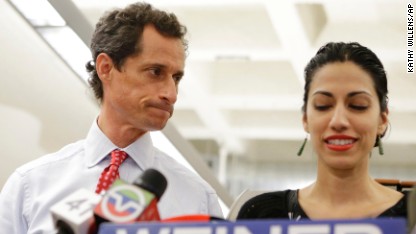
a) A politician who tweeted pictures of his crotch?

'Not an easy choice' to stay

Weiner's wife takes spotlight this time

Huma Abedin was front and center as mayoral candidate Anthony Weiner confessed to further explicit exchanges online. FULL STORY
 
b) A baby born to royals in a foreign country?
 
Prince William, his wife Catherine and the little prince start their first full day at home together, but something is missing -- his name. FULL STORY
 
 
So, have you heard what's going on in my state?
 
How the North Carolina legislature just might be one of the worst in US history? How it is dismantling public education, stripping local jurisdictions of their right to control their own water supplies right before our very eyes, reducing our ability to vote, reforming the tax code to increase the burden on the poor in order to give more money to the rich? etc. etc.
 
Nope, it's not national news, at least not on the websites of the major television and newspapers. And so now you understand why it is happening.


Thursday, May 9, 2013

North Carolina about to do something SANE?

North Carolina may join a small number of states to ban for the execution of the mentally ill, something I've been pushing toward for a number of years.

We'll see what happens.

This is a strange bill coming at a time when the state is trying to resume executions and completely strike down the Racial Justice Act. But we'll take it if it passes.

From WRAL:

House to vote on execution ban for mentally disabled

State House lawmakers are expected to vote next week on a bill that would let judges take the death penalty off the table for capital defendants with severe mental disability.

The measure, House Bill 722, won approval from the House Judiciary B subcommittee Wednesday evening. It sets up a very specific definition for "severe mental disability" involving a history of problems, an inability to understand the the wrongness of the crime, or to exercise rational judgment.

The accused would have to present "clear and convincing evidence" of the disability, and could not use the defense for a crime committed under voluntary intoxication, even if habitual.

A judge would be allowed to decide at a pre-trial hearing whether a defendant meets the criteria. If the judge agreed, the death penalty couldn't be sought, but the defendant wouldn't be able to raise the insanity defense at trial.

The measure also provides for retroactive application through Motions for Appropriate Relief for those already on death row.

Sponsor Rep. Paul Stam, R-Wake, said the issue of executing the mentally disabled is "nothing new," quoting 18th century legal scholar William Blackstone: "A madman shall be punished by his madness alone."

"You don't deter crime by punishing those that everybody knows can't be deterred - the people who are clearly mentally disabled or deficient," he said in committee. "That's what this bill is about. It's not - not, not, not - about weakening the death penalty on capital crimes."

Stam said the House passed an identical measure in 2011, but the Senate refused to consider it.

"We think there may be a change of thought in the Senate side," he told the committee. "Frankly, I think they will take it up this time. Once the capital punishment main bill is settled, it makes it easier to do that, because we're not in an indefinite moratorium."

NC Conference of DAs director Peg Dorer spoke against the proposal, saying claims of severe mental disability are common in every capital case.

"DAs oppose this bill," she said. "The issue of mental disability should be weighed by the jury, not by the judge. it only takes one juror to make that decision, and the death penalty is not found."

Dorer said the change would encourage "judge shopping," and would cost more money, as opposed to saving it, as proponents claim. She predicted that all the current inmates on the state's death row would seek relief under the measure, forcing the state to re-litigate those cases.

That concern was echoed by Rep. Debra Conrad, R-Forsyth, who said her local DA "compared the bill to the Racial Justice Act," predicting that "it will the end death penalty as a punishment in North Carolina."

Dorer said she hadn't talked with a single DA who supports the bill. But co-sponsor Rep. Rick Glazier, D-Cumberland, said that many DAs will admit privately they'd rather let a judge make the decision in such cases.

"There are cases where, because of the politics of the case, of repercussions in the community, a DA feels they have no choice but to proceed" to seek the death penalty despite mental disability, Glazier said, "even if they know what the outcome will be."

Glazier said such cases cost hundreds of thousands of dollars and take weeks to try. He said allowing judges to rule on disability before the trial would cut out much of that."This gets us to where we're going to be in 99.9% of these cases, anyway."

In 1992 in Fayetteville, Glazier defended one of the infamous "Ninja Killers" who killed three people. The other defendant was sentenced to death - "and rightly so," Glazier added - for stabbing his victims 44 times.

Glazier's client, the other defendant, had stabbed one victim once. He was 19 with a history of mental illness that stretched back to early childhood. He had been institutionalized twice, and was kicked out of the military shortly before the crime because "he wasn't capable of doing his job."

The DA still sought the death penalty. The trial took six weeks and included 38 witnesses, and Glazier said the jury, after four days, found his client guilty but sentenced him to life without parole because of his mental disability. "My client went catatonic the last day of trial and has never spoken a word since in Central Prison."

Glazier said H722 would also end the abuse of the insanity defense for drug or alcohol use. "Right now, you can use the insanity defense for any case where you can make a case for it," he said. "It should be an exceptional defense that is rarely used."

The measure passed the committee with two no votes from freshmen Reps. Conrad and Brian Brown, R-Mecklenburg. Its next stop is the House floor.
 

Wednesday, December 26, 2012

Prisoners to be released in North Carolina

How, exactly, does this happen?

A U.S. Justice Department review has identified at least 175 federal prisoners who must be released or resentenced because they have been locked up improperly.

The review, which followed a USA TODAY investigation, found that some of those prisoners shouldn't have been imprisoned because they hadn't committed a federal crime. Others received sentences vastly longer than the law allows.

The problems stem from a misunderstanding about which North Carolina state convictions were serious enough to outlaw gun possession or require extended prison sentences under federal law. The number of prisoners ultimately freed or given shorter sentences is likely to be higher than 175 because the examination by federal prosecutors was confined to the smallest of North Carolina's three U.S. court districts. Justice Department spokesman Wyn Hornbuckle said "many more" cases could be upended when all are reviewed.

So it comes from bad lawyering? In my state.

Ah, North Carolina. Making the news once again for all the wrong reasons.

Here is the rest of the story.

Wednesday, October 3, 2012

Race and the death penalty back in the news in NC

The issue of race and capital punishment has been widely studied in my state.

So we know the facts.

In 2009, the state passed the historic Racial Justice Act. Then the law was repealed. Twice. (Google it, please)

Yet, race still impacts the imposition of the death penalty in my state, as well as just about everywhere it has ever been studied.

So this story from my state caught my attention:


A university researcher testified on Tuesday that race influenced prosecutors' decisions to reject black jurors from serving on three of Cumberland County's most notorious murder trials.

Between 1990 and August 2010, the race of potential jurors "was a significant factor" in whether prosecutors struck them from death penalty cases, Michigan State University law professor Barbara O'Brien testified at a Racial Justice Act hearing for the three defendants.

The three defendants, Christina Walters, Quintel Augustine and Tilmon Golphin, are on death row. They are attempting to use the N.C. Racial Justice Act to prove racism was a factor that led to their death sentences.

If they win, their sentences will be converted to life in prison without parole.

Walters killed two women as part of a gang initiation ritual. Golphin killed a state trooper and a Cumberland County sheriff's deputy in a traffic stop, and Augustine was convicted for the murder of a Fayetteville police officer.

This hearing hinges on allegations of racism in the jury selection process.

At a trial, defense lawyers and prosecutors vet potential jurors on whether they will be helpful to their side. Some jurors express obvious biases and can be dismissed outright.

But each side may also reject a limited number of jurors without stating a reason for blocking them. These rejections are peremptory challenges.

O'Brien co-authored a statistical study of North Carolina death penalty cases. It says prosecutors have a pattern of using peremptory challenges to block blacks from serving on the juries of capital murder trials. The U.S. Supreme Court has ruled that potential jurors may not be struck peremptorily because of their race.

O'Brien testified that race was a significant factor in prosecutors' jury selection decisions statewide, locally and in the three defendants' trials. The results "support an inference of intentional discrimination" on the part of the prosecutors, she said.

Statewide, black jurors were twice as likely to be dismissed, she said. They also were twice as likely to be dismissed in Golphin's trial, she said.

At Walters' trial, blacks were struck 3.6 times as often, O'Brien said, and 3.7 times as often during Augustine's trial.

Prosecutors sometimes seat death-penalty qualified jurors who still express reservations about it.
Statewide, O'Brien said, 9.7 percent of black jurors with death penalty reservations were approved by prosecutors versus 26.4 percent of non-black jurors.

In Cumberland County blacks with reservations about the death penalty were seated by prosecutors 5.9 percent of the time, versus 26.3 percent of the time for non-black jurors with such reservations, O'Brien said.

O'Brien analyzed the jury selection patterns both under the Racial Justice Act of 2009 and a the more restrictive version that lawmakers passed this summer after a convicted murderer from Fayetteville used the 2009 law to get off death row.

There is dispute over which version of the law applies to Walters, Golphin and Augustine, so O'Brien analyzed their cases under both versions of the law. Under both standards, she said, she found racial bias.

During cross-examination, Union County Assistant District Attorney Jonathan Perry questioned O'Brien about her notes, decision-making and her methods in analyzing the data. Perry has a statistics background, so he is assisting the Cumberland County District Attorney's Office with the case.

The hearing was stopped after the electricity failed at 4:10 p.m. Much of the city lost power because of a malfunction at the city's power plant, said Public Works Commission board member Lou Olivera.

In other developments:

The defense lawyers are seeking transcripts of the trials of James Burmeister and Malcolm Wright. Burmeister and Wright were two racist skinheads in the Army who in 1995 went to a poor neighborhood in Fayetteville and killed a black man and woman they found there.

Prosecutors unsuccessfully sought death sentences for Burmeister and Wright. Burmeister died in prison; Wright is serving life without parole.

The District Attorney's Office was looking for the transcripts on Tuesday afternoon.

Augustine wrote a note to his mother, who attended the trial, and lawyer James Ferguson II attempted to deliver it to her. That was a security violation, so Ferguson was stopped.

The incident is to be discussed when the hearing resumes.

So, yes, race is still a problem in the state, in the sense that it continues to impact death penalty practice. So we've got that covered this semester at App State!


Wednesday, July 25, 2012

Prison is a whole from where light does not emerge

In the book, it is shown that most Americans have never seen the inside of prisons, although shows such as LockUp, unrealistic though they may be, at least give people a glimpse of some of the realities of prison life.

Yet, it remains true that most of what goes on behind prison walls is completely unknown. Part of this is owing to the fact that the news media tend not to cover stories like this one:

http://prisonbooks.info/2012/07/18/prisoners-begin-hunger-strike-at-three-facilities/#more-1334

Did you know prisoners in North Carolina had launched a hunger strike? Neither did I. Because it is not in the news, and the news is where we go for information.

This is just another example of the news media not doing its job. And since we are paying for incarceration, it is our business what goes on there.


Thursday, January 26, 2012

Stories that you just will not believe!

First, I get to campus this morning and this is the message with which I am greeted:

Campus Crime Alert
ASSAULT
On Tuesday January 24, 2012 at approximately 8:46 PM, two female students reported to the ASU Police Department that they had been physically assaulted by the same known male acquaintance within the past week.
 
 
_______________________
 
My response? So arrest the guy! Then if he is convicted, tell us all about him. Until then, why are you bothering me with it? I mean, you're not telling us his name or anything so that we can protect ourselves if we see him. 

_______________________
 
Second, there is this, which leaves me breathless:
A convicted murderer on death row in North Carolina wrote a taunting letter to his hometown newspaper about his life of "leisure" in prison and making a mockery of the legal system.
Danny Robbie Hembree Jr. was found guilty of murdering 17-year-old Heather Catterton in 2009 and was sentenced to death on Nov. 18, 2011.

Hembree, 50, is on death row at Central Prison in Raleigh, N.C., but he's not looking for any pity in the letter he sent to The Gaston Gazette.

"Is the public aware that I am a gentleman of leisure, watching color TV in the A.C., reading, taking naps at will, eating three well balanced hot meals a day," Hembree asked in the letter. "I'm housed in a building that connects to the new 55 million dollar hospital with round the clock free medical care 24/7."

He also asks if the public knows that the chances of his "lawful murder" taking place in the next 20 years, if ever, are "very slim."

His words:

"I am a man who is ready to except [sic] his unjustful punishment and face God almighty with a clean conscience unlike you cowards and your cowardly system," Hembree wrote. "Kill me if you can suckers. Ha! Ha! Ha!"

http://abcnews.go.com/US/death-row-inmate-writes-taunting-letter-life-leisure/story?id=15438651#.TyFqFdS-bz8
_______________________

This above story is NATIONAL news out of my state. And predictably, supporters of the death penalty are calling for his execution and saying, "See, told you we need the death penalty!"

My response, then kill him. But then again, do we really let people like this decide for us how we will behave? Do you let killers decide our fate?

The fact is that this guy is sadly right. The death penalty is a joke. And he will likely live on death row forever. So why have it in the first place? Study after study after study in our state shows it is not a workable punishment. It is not good policy.
_______________________

And third, there is this! About our failing drug war.


After 40 years of defeat and failure, America's "war on drugs" is being buried in the same fashion as it was born – amid bloodshed, confusion, corruption and scandal. US agents are being pulled from South America; Washington is putting its narcotics policy under review, and a newly confident region is no longer prepared to swallow its fatal Prohibition error. Indeed, after the expenditure of billions of dollars and the violent deaths of tens of thousands of people, a suitable epitaph for America's longest "war" may well be the plan, in Bolivia, for every family to be given the right to grow coca in its own backyard.


The "war", declared unilaterally throughout the world by Richard Nixon in 1969, is expiring as its strategists start discarding plans that have proved futile over four decades: they are preparing to withdraw their agents from narcotics battlefields from Colombia to Afghanistan and beginning to coach them in the art of trumpeting victory and melting away into anonymous defeat. Not surprisingly, the new strategy is being gingerly aired in the media of the US establishment, from The Wall Street Journal to the Miami Herald.

Prospects in the new decade are thus opening up for vast amounts of useless government expenditure being reassigned to the treatment of addicts instead of their capture and imprisonment. And, no less important, the ever-expanding balloon of corruption that the "war" has brought to heads of government, armies and police forces wherever it has been waged may slowly start to deflate.

Prepare to shed a tear over the loss of revenue that eventual decriminalisation of narcotics could bring to the traffickers, large and small, and to the contractors who have been making good money building and running the new prisons that help to bankrupt governments – in the US in particular, where drug offenders – principally small retailers and seldom the rich and important wholesalers – have helped to push the prison population to 1,600,000; their imprisonment is already straining federal and state budgets. In Mississippi, where drug offenders once had to serve 85 per cent of their sentences, they are now being required to serve less than a quarter. California has been ordered to release 40,000 inmates because its prisons are hugely overcrowded.

http://www.independent.co.uk/news/world/americas/us-waves-white-flag-in-disastrous-war-on-drugs-1870218.html

 _______________________


That is, this story is being ignored in the US press. And why is that?


Tuesday, January 3, 2012

New laws for 2012

Every year brings new laws. Makes you wonder how we survived the previous year without them, doesn't it?

Here are some of the new laws in my state, North Carolina:

Starting Sunday, pharmacies will be required to enter customers into a national database when they want to buy cold medicine that contains pseudoephedrine, a key ingredient in making methamphetamine. The database will block the sale if the person has gone on a buying spree for the drug.

Other new laws include one that means more criminals convicted of misdemeanors will be housed in county jails rather than in state prisons. It's part of a new policy approved by the Legislature with the goal of reducing correctional costs and recidivism.

New laws also mean changes to how teenagers in North Carolina get their licenses.
The law requires teenagers with a learner's permit will have to do a little more paperwork before moving on to the next step in the state's three-step graduated license program for adolescent drivers. The first log requires 60 hours of time behind the wheel under the supervision of a parent or other experienced driver. The second log, for Level 2 drivers, requires 12 additional hours. Signed copies of the logs have to be presented before moving to the next level.

http://www.wral.com/news/state/nccapitol/story/10549655/ 

And then there is this one:

State tax collector will have fewer powers to force corporations to redo their tax returns if they're suspected of dodging taxes.

Nice! Who is in power again?

http://www.wral.com/news/story/10540203/

Monday, January 2, 2012

Death penalty in North Carolina

In the news ...

BOONE -- My hope for the New Year is that lawmakers in North Carolina will finally find the courage to abolish the death penalty, a punishment rooted in politics rather than science, and simultaneously get serious about reducing crime.

Research in the state, summarized in my report "The Death Penalty in North Carolina: A Summary of the Data and Scientific Studies," shows that capital punishment is rare, ineffective, expensive, biased and imperfect. The only thing left to do now is acknowledge this and put an end to it.

For decades North Carolina was one of the leading death penalty states. We were one of the top 10 states in terms of the number of people we sentenced to death and executed in any given year. And yet our murder rate was also always above the national average.

In the past decade, this all changed as the practice of capital punishment in the state has faced serious challenges. We've seen problems with the quality of representation offered to defendants. We've discovered that innocent people have been convicted and sentenced to death. And we've seen clear evidence of racial bias.

The good news is that the state has taken steps to address each of these problems.

First, the Office of Indigent Services was created in 2000 to reduce the representation of capital defendants by unqualified and inexperienced defense attorneys. Second, the North Carolina Innocence Inquiry Commission was established in 2006 to investigate and evaluate post-conviction claims of factual innocence. And in 2009, the state passed the Racial Justice Act, which bans racial discrimination in the death penalty and corrects for it by setting aside death sentences in cases where race "is shown to have been a significant factor" in seeking or imposing the death penalty.

The General Assembly recently repealed this law, but the governor vetoed the repeal; only a three-fifths vote by legislators will override the veto.

The bad news is that all our efforts to correct for the problems of the death penalty in our state amount to what former Supreme Court Justice Harry Blackmun called "tinkering with the machinery of death." The result is a freakishly rare system of capital punishment that requires taxpayers to spend tens of millions of dollars to maintain but not actually use.

North Carolina courts now hand out only about three death sentences a year, and the state has not executed anyone since August 2006 because of unresolved disputes over the lethal injection process.

When Justice Blackmun said he would no longer tinker with the machinery of death in 1994, he added: "For more than 20 years I have endeavored ... to develop ... rules that would lend more than the mere appearance of fairness to the death penalty endeavor ... I feel ... obligated simply to concede that the death penalty experiment has failed. It is virtually self-evident to me now that no combination of procedural rules or substantive regulations ever can save the death penalty from its inherent constitutional deficiencies."

Ironically, Blackmun was one of the jurists who dissented in the 1987 case, McCleskey v. Kemp, which rejected the appeal of Warren McCleskey, whose attorneys showed that killers of whites (and especially black killers of whites) were more likely to be sentenced to death in Georgia; this is the reality of capital punishment in North Carolina today.

That ruling gave us the impossible-to-prove standard that individuals must be able to show that state officials discriminated against them as individuals in order to overturn a death sentence; this is the standard Republican legislators want to return to by striking down the Racial Justice Act.

Whereas it's too late for Blackmun, it's not too late for North Carolina. Our own experience over the past decade proves that we can live without the death penalty.

As death sentences declined in North Carolina in what was the greatest overall reduction in death sentences in the country in the first decade of the 21st century, the murder rate also fell. In 2000, the state's murder rate ranked it eighth in the nation; by 2010, the state's murder rate was the lowest level in our recorded history and was down to 15th in the nation.

We now have all the facts.

The only thing standing in the way of abolition is a lack of courage. May this be the year we finally do the right thing and kill the death penalty. In its place, let's get serious about reducing crime by pursuing strategies rooted in science that are proven to work.


Wednesday, November 30, 2011

State of NC repeals the Racial Justice Act

So does this mean we don't stand for racial justice?

My thoughts on the matter, sent to the state's Governor:

This is Dr. Matthew Robinson, Professor of Government and Justice Studies at Appalachian State University in Boone, NC.


I am contacting you to urge you to VETO the recently passed bill that repeals the Racial Justice Act. I know you signed the Racial Justice Act into law, so I am asking you to now protect it from repeal.


I recently analyzed publicly available data as well as every study conducted on North Carolina’s death penalty system in order to provide an evaluation of capital punishment in our state. The result is my recently released report—“The Death Penalty in North Carolina: A Summary of the Data and Scientific Studies.” In the report, I summarize all that we know about the death penalty as it is actually practiced in our state. The report is available online: http://www.pscj.appstate.edu/ncdeathpenalty/

One of the five major findings of all this research is:

* Capital punishment in North Carolina is characterized by serious disparities based on extra-legal factors such as race and gender. Specifically, numerous studies illustrate that killers of whites are three or more times more likely to be sentenced to death than killers of blacks, even after controlling for legally-relevant variables. Further, killers of white females are most likely to be sentenced to death and executed, especially when the offenders are African American males. *

This finding, along with all the others, is explained in great detail in the report.

Capital punishment is a state-created and implemented public policy. Analysis and evaluation of capital punishment policy, like all policies, is part of the normal policy process. My analysis and evaluation of the death penalty in North Carolina, paid for by taxpayers who fund my position, calls for action. I ask that you to read the report and take appropriate action.


APPROPRIATE ACTION in today's case means protecting the state's Racial Justice Act, which is the primary mechanism to assure that racial bias does not persist in the death penalty. I call on you to protect this law by vetoing the bill just passed by the General Assembly!


I am available to talk with you or meet with you at your convenience. If you want to discuss the findings of my research or meet in person to discuss appropriate actions, please do not hesitate to contact me.

Sincerely,
Matthew Robinson, PhD

Hi again from Dr. Matthew Robinson, Professor of Government and Justice Studies at Appalachian State University in Boone, NC.

I wanted to explain to you the major problem with repealing the Racial Justice Act and replacing it with the new bill that just passed the Senate yesterday.

That bill reverts back to the standard set by the US Supreme Court in McCleskey v. Kemp (1987), one of the worst decision ever reached by the Court. In that case, the Court recognized the validity of a study showing clear racial bias in the application of the death penalty in Georgia (the very same problem we see in North Carolina today--bias in the death penalty based on race of victims generally AND against minority defendants in inter-racial cases).

Yet, the Court held that an individual defendant must demonstrate discrimination in his or her specific case in order for the case to be considered unconstitutional. That is, he or she must be able to demonstrate that the prosecutor acted in a discriminatory fashion in the individual case or that the legislature intended to make discriminatory law. This is simply impossible in almost every case for it basically requires a defendant to get inside the head of an individual prosecutor (or legislator or juror).

McCleskey was a 5-4 decision that violated previous Court precedent as well as the way statistical evidence of race discrimination is treated in other areas of law including workplace discrimination and even using peremptory challenges to exclude potential jurors from service! How to address the latter issue was decided by the SAME COURT in Batson v. Kentucky (1986) when the Court held that prosecutors must prove that race did NOT play a role in dismissal of potential jurors if the defendant alleges that race played a role in jury selection.

So, you see the contradiction? Under Batson, if a defendant thinks a prosecutor is using race to excuse jurors, the Court requires prosecutors to prove they are NOT being discriminatory. But under McCleskey, if a defendant thinks he or she is being discriminated against in a capital case, the Court requires defendants to show that officials have discriminatory intent. This is inconsistent.

More importantly, it is also impossible to do. We know, based on careful studies in our state, that prosecutors use race to discriminate in jury selection. We know, based on careful studies in our state, that jurors use race in determining who lives and who dies. My review of these studies shows these facts: “The Death Penalty in North Carolina: A Summary of the Data and Scientific Studies.” In the report, I summarize all that we know about the death penalty as it is actually practiced in our state. The report is available online: http://www.pscj.appstate.edu/ncdeathpenalty/

Thus, I am contacting you again to urge you to VETO the recently passed bill that repeals the Racial Justice Act. I know you signed the Racial Justice Act into law, so I am asking you to now protect it from repeal.

If you want to know about these cases I have mentioned, please read my assessment of them here: Robinson, Matthew B., and Kathleen M. Simon (2006), Logical and Consistent? An Analysis of Supreme Court Opinions Regarding the Death Penalty.  Justice Policy Journal 3(1): 1-59. http://www.cjcj.org/files/logical_and.pdf

Sincerely,

Matthew Robinson, PhD

Tuesday, November 8, 2011

Forced sterilization in North Carolina still in the news

Major props to serious newspapers for keeping this story in our minds.

The story is still shocking, even for those who know it well:

Charlotte, N.C. - Janice Black's crooked signature crawls across the consent form. She didn't know what kind of paper she was signing. Her name was the only thing she knew how to write.
It was 1971. She was 18. Janice's IQ had tested out at 44. Her estimated mental age was 7. Her family decided she wasn't fit to raise children.

Her stepmother took her to Charlotte Memorial Hospital. Janice didn't know why. She didn't feel sick.
She woke in a hospital bed. She tried to get up, and it hurt. She looked and saw an incision from her belly button on down.

The state of North Carolina had sterilized her.

Between 1929 and 1974, the state - through the N.C. Eugenics Board - authorized the sterilizations of some 7,600 North Carolinians who were classified as mentally ill, epileptic or "feebleminded."


by Tommy Tomlinson and Ann Doss Helms, McClatchy Newspapers

Monday, October 10, 2011

Why the death penalty is hatled in North Carolina

From The Herald-Sun

N.C. high court rules with state on death penalty
10.07.11 - 08:48 pm
BY TOM BREEN

Associated Press

RALEIGH — A North Carolina Supreme Court ruling on Friday that affirms how the state approved new lethal injection procedures is unlikely to change the current de facto moratorium on capital punishment here, a lawyer in the case said.

"There are a lot of other lethal injection lawsuits that are outstanding right now," said David Weiss of the Center for Death Penalty Litigation. "We're in a position right now where we're not even thinking about resuming executions because we've got so many issues to deal with."

Noelle Talley, spokeswoman for the attorney general's office, said lawyers there are still reviewing the court's decision, but that even with Friday's ruling there are still legal challenges involving the death penalty both in Wake County and federal court.

The case before the justices was a largely technical matter concerning the 2007 approval by the Council of State of new lethal injection guidelines developed by the Department of Correction. Lawyers for five death row inmates argued that the council failed to follow requirements for approving new agency policies as set forth by a state law called the Administrative Procedures Act.

But the Supreme Court unanimously decided that because the correction department is explicitly exempt from the ADA, the council wasn't under any obligation to follow the law's procedures for new policies in this case.

The Council of State consists of North Carolina's 10 holders of statewide elected office.

A series of legal challenges, new legislation and law enforcement controversies have effectively held up executions in North Carolina since Aug. 18, 2006, when Samuel R. Flippen was put to death for the murder of his 2-year-old stepdaughter.

An audit last year found serious problems with work done by the state blood analysis crime lab, and the Racial Justice Act has allowed death row inmates to appeal their sentences by citing statistical evidence to argue that race may have distorted the process.

For those reasons, Weiss believes the court's ruling, while a setback to death penalty opponents, is unlikely to mean executions will swiftly resume.

"There's no reason to think about the resumption of executions right now," he said.

 ______________________________________

Oh, yeah, and then there is this.

I find it appalling that the state's highest Court would make the ruling that it did, although nothing surprises me anymore.

It is also appalling that the Council of State makes such decisions in the first place. After all, these are not criminal justice experts nor do they know anything about the death penalty. They are simple the heads of state agencies dealing with issues like transportation and education.

The death penalty in North Carolina is undeniably broken and also not fixable. We can keep playing these games with it or we can finally do what is right and come up with a different solution that protect society from murderers and provides justice for society and crime victims.

In case you think we need the death penalty for the above goals, consider the reality that murder is down in North Carolina even after we've stopped killing murderers.

Tuesday, April 19, 2011

North Carolina death penalty study in the news

I'll be on a live radio show today at NOON on North Carolina Public Radio: "The State of Things." Listen live or download it later here: http://wunc.org/programs/tsot

wunc.org
The State of Things is a live program hosted by Frank Stasio devoted to bringing the issues, personalities, and places of North Carolina to our listeners. We present the Tar Heel experience through sound, story, discussion, commentary and listener participation through calls.

And here is some of the news coverage, so far!


http://www.newsobserver.com/2011/03/16/1056240/face-up-to-the-facts-and-end-the.html


http://www.deathpenaltyinfo.org/studies-north-carolinas-death-penalty-error-prone-and-extremely-rare

http://www.news.appstate.edu/2011/04/13/n-c-death-penalty/

http://www.wgnc.net/index.php?option=com_content&view=article&id=12191%3An-c-death-penalty-review-provides-data-for-lawmakers-and-others-%C2%BB-news-archive-%C2%BB-appalachian-state-university-news&catid=82%3Anc-news-by-google&Itemid=241


And more too ...

Death penalty in NC should be scrapped, scholar's report says
Shelby Star - ‎3 hours ago‎
AP RALEIGH (AP) — An Appalachian State University professor says North Carolina's death penalty process is so full of flaws it should be repealed. Matthew Robinson is scheduled to release his research Monday at the North Carolina Advocates for Justice ...

NC scholar's report calls for end to death penalty
WWAY NewsChannel 3 - ‎4 hours ago‎
RALEIGH, NC (AP) -- An Appalachian State University professor says North Carolina's death penalty process is so full of flaws it should be repealed. Matthew Robinson is scheduled to release his research Monday at the North Carolina Advocates for ...

NC scholar's report calls for end to death penalty
The Virginian-Pilot - ‎4 hours ago‎
AP An Appalachian State University professor says North Carolina's death penalty process is so full of flaws it should be repealed. Matthew Robinson is scheduled to release his research today at the North Carolina Advocates for Justice office in ...

NC scholar's report calls for end to death penalty
Greenville Daily Reflector - ‎5 hours ago‎
AP RALEIGH, NC (AP) — An Appalachian State University professor says North Carolina's death penalty process is so full of flaws it should be repealed. Matthew Robinson is scheduled to release his research Monday at the North Carolina Advocates for ...
WFMY News 2

Professor: NC Death Penalty Process Flawed
WFMY News 2 - ‎6 hours ago‎
Raleigh, NC -- An Appalachian State University professor says North Carolina's death penalty process is so full of flaws it should be repealed. Matthew Robinson is scheduled to release his research Monday at the North Carolina Advocates for Justice ...

NC Scholar'S Report Calls For End to Death Penalty
WNCT - ‎6 hours ago‎
By AP Writer | (AP) RALEIGH, NC (AP) An Appalachian State University professor says North Carolina's death penalty process is so full of flaws it should be repealed. Matthew Robinson is scheduled to release his research Monday at the North Carolina ...

NC scholar's report calls for end to death penalty
BlueRidgeNow.com - ‎7 hours ago‎
AP An Appalachian State University professor says North Carolina's death penalty process is so full of flaws it should be repealed. Matthew Robinson is scheduled to release his research Monday at the North Carolina Advocates for Justice office in ...

NC Scholar's Report Calls For End To Death Penalty
WITN - ‎7 hours ago‎
An Appalachian State University professor says North Carolina's death penalty process is so full of flaws it should be repealed. Matthew Robinson is scheduled to release his research Monday at the North Carolina Advocates for Justice office in Raleigh. ...

NC scholar's report calls for end to death penalty
Daily Comet - ‎8 hours ago‎
AP RALEIGH, NC - An Appalachian State University professor says North Carolina's death penalty process is so full of flaws it should be repealed. Matthew Robinson is scheduled to release his research Monday at the North Carolina Advocates for Justice ...

NC scholar's report calls for end to death penalty
Stamford Advocate - ‎8 hours ago‎
RALEIGH, NC (AP) — An Appalachian State University professor says North Carolina's death penalty process is so full of flaws it should be repealed. Matthew Robinson is scheduled to release his research Monday at the North Carolina Advocates for ...

NC scholar's report calls for end to death penalty
Albany Times Union - ‎8 hours ago‎
RALEIGH, NC (AP) — An Appalachian State University professor says North Carolina's death penalty process is so full of flaws it should be repealed. Matthew Robinson is scheduled to release his research Monday at the North Carolina Advocates for ...

NC scholar's report calls for end to death penalty
Ct Post - ‎8 hours ago‎
RALEIGH, NC (AP) — An Appalachian State University professor says North Carolina's death penalty process is so full of flaws it should be repealed. Matthew Robinson is scheduled to release his research Monday at the North Carolina Advocates for ...

NC scholar's report calls for end to death penalty
Beaumont Enterprise - ‎8 hours ago‎
RALEIGH, NC (AP) — An Appalachian State University professor says North Carolina's death penalty process is so full of flaws it should be repealed. Matthew Robinson is scheduled to release his research Monday at the North Carolina Advocates for ...

NC scholar's report calls for end to death penalty
Greenwich Time - ‎8 hours ago‎
RALEIGH, NC (AP) — An Appalachian State University professor says North Carolina's death penalty process is so full of flaws it should be repealed. Matthew Robinson is scheduled to release his research Monday at the North Carolina Advocates for ...

NC scholar's report calls for end to death penalty
San Antonio Express - ‎8 hours ago‎
RALEIGH, NC (AP) — An Appalachian State University professor says North Carolina's death penalty process is so full of flaws it should be repealed. Matthew Robinson is scheduled to release his research Monday at the North Carolina Advocates for ...

NC scholar's report calls for end to death penalty
Danbury News Times - ‎8 hours ago‎
RALEIGH, NC (AP) — An Appalachian State University professor says North Carolina's death penalty process is so full of flaws it should be repealed. Matthew Robinson is scheduled to release his research Monday at the North Carolina Advocates for ...

NC scholar's report calls for end to death penalty
Charlotte Observer - ‎9 hours ago‎
AP RALEIGH, NC An Appalachian State University professor says North Carolina's death penalty process is so full of flaws it should be repealed. Matthew Robinson is scheduled to release his research Monday at the North Carolina Advocates for Justice ...

NC scholar's report calls for end to death penalty
WECT-TV6 - ‎9 hours ago‎
AP - April 18, 2011 4:15 AM ET RALEIGH, NC (AP) - An Appalachian State University professor says North Carolina's death penalty process is so full of flaws it should be repealed. Matthew Robinson is scheduled to release his research Monday at the North ...

NC scholar's report calls for end to death penalty
WBTV - ‎9 hours ago‎
AP - April 18, 2011 4:15 AM ET RALEIGH, NC (AP) - An Appalachian State University professor says North Carolina's death penalty process is so full of flaws it should be repealed. Matthew Robinson is scheduled to release his research Monday at the North ...

NC scholar's report calls for end to death penalty
WLOS - ‎9 hours ago‎
RALEIGH, NC (AP) -- An Appalachian State University professor says North Carolina's death penalty process is so full of flaws it should be repealed. Matthew Robinson is scheduled to release his research Monday at the North Carolina Advocates for ...

NC scholar's report calls for end to death penalty
Myrtle Beach Sun News - ‎9 hours ago‎
AP RALEIGH, NC -- An Appalachian State University professor says North Carolina's death penalty process is so full of flaws it should be repealed. Matthew Robinson is scheduled to release his research Monday at the North Carolina Advocates for Justice ...

NC scholar's report calls for end to death penalty
News & Observer - ‎9 hours ago‎
AP RALEIGH -- An Appalachian State University professor says North Carolina's death penalty process is so full of flaws it should be repealed. Matthew Robinson is scheduled to release his research today at the North Carolina Advocates for Justice ...

Repeal Capital Punishment in North Carolina, Says Study
Public News Service - ‎9 hours ago‎
... recent revelation that evidence has been mishandled by the state crime lab, possibly sending innocent people to death row, as study author Dr. Matthew Robinson, professor of government and justice studies at Appalachian State University, explains. ...

Report by Appalachian State professor says NC death penalty process should be ...
My Fox 8 - ‎9 hours ago‎
By AP RALEIGH, NC (AP) — An Appalachian State University professor says North Carolina's death penalty process is so full of flaws it should be repealed. Matthew Robinson is scheduled to release his research Monday at the North Carolina Advocates for ...

Report by Appalachian State professor says NC death penalty process should be ...
WTKR Your NewsChannel 3 - ‎9 hours ago‎
By AP RALEIGH, NC (AP) — An Appalachian State University professor says North Carolina's death penalty process is so full of flaws it should be repealed. Matthew Robinson is scheduled to release his research Monday at the North Carolina Advocates for ...

NC scholar's report calls for end to death penalty
WRAL.com - ‎9 hours ago‎
RALEIGH, NC — An Appalachian State University professor says North Carolina's death penalty process is so full of flaws it should be repealed. Matthew Robinson is scheduled to release his research Monday at the North Carolina Advocates for Justice ...

Report by Appalachian State professor says NC death penalty process should be ...
Daily Journal - ‎9 hours ago‎
AP RALEIGH, NC — An Appalachian State University professor says North Carolina's death penalty process is so full of flaws it should be repealed. Matthew Robinson is scheduled to release his research Monday at the North Carolina Advocates for Justice ...

Report by Appalachian State professor says NC death penalty process should be ...
The Republic - ‎9 hours ago‎
AP RALEIGH, NC — An Appalachian State University professor says North Carolina's death penalty process is so full of flaws it should be repealed. Matthew Robinson is scheduled to release his research Monday at the North Carolina Advocates for Justice ...
An Appalachian State University professor says North Carolina lawmakers should seriously consider repealing the death penalty because it's financially expensive, carried out infrequently and doesn't deter crime. Matthew Robinson spoke at a Monday news conference assembled by the state's trial lawyer

Put the death penalty itself on trial
And it would collapse under the preponderance of evidence:
Robinson analyzed years of data about the death penalty, which he said costs millions of dollars annually and capital murder cases are nearly four times more expensive than non-capital cases. He said seven people have been exonerated and freed from North Carolina's death row since the early 1970s.
If the Republicans really want to cut wasteful programs, this should be at the top of their list. But first they'd have to join us here in the 21st Century.
http://www2.journalnow.com/news/2011/apr/19/WSMET01-death-penalty-ineffective-too-expensive-ne-ar-959351/

Published: April 19, 2011, Winston Salem Journal, http://www2.journalnow.com/news/2011/apr/19/WSMET01-death-penalty-ineffective-too-expensive-ne-ar-959351/

Death penalty ineffective, too expensive, new study says
By MICHAEL HEWLETT

North Carolina should repeal the death penalty because it is expensive, ineffective and racially biased, an Appalachian State University professor says in a new study.

The study was done by Matthew Robinson, a professor of government and justice studies. Robinson analyzed data from more than 20 studies on the death penalty and released his findings Monday at a news conference in Raleigh.

NC scholar's report calls for end to death penalty

Beaumont Enterprise
...NC (AP) — An Appalachian State University professor says North Carolina... which he said costs millions of dollars annually and capital murder cases ...

NC scholar's report calls for end to death penalty

Danbury News Times

RALEIGH, NC (AP) — An Appalachian State University professor says North Carolina lawmakers should seriously consider repealing the
death penalty because it's financially expensive, carried out infrequently and doesn't deter crime.


NC scholar's report calls for end to death penalty | The Asheville Citizen-Times | citizen-times.com
www.citizen-times.com
Monday, April 18, 2011

Press Conference Today!

Raleigh, NC --

I am here from Boone, NC to release to the public my report, “The Death Penalty in North Carolina: A Summary of the Data and Scientific Studies.” The study is online at www.pscj.appstate.edu/ncdeathpenalty

The report contains two major components:
1)     a summary of publicly available data on the state population, murder arrests, and capital punishment practice in the state of North Carolina, and
2)     a summary of every study of North Carolina’s death penalty system (from scholars inside and outside of the state)

The report was motivated by my desire to produce a policy-relevant document for legislators and other officials who create, implement, and review state policy.

Capital punishment is a public policy struck down by the US Supreme Court in 1972 and re-implemented in 1977; from 1977 until 2006, North Carolina was one of the most active death penalty states in the nation (ranking in the top 10 in the number of death sentences and executions per year, and in the size of its death row).

Yet, our last execution was in August 2006, almost five years ago. During this unofficial moratorium, death sentences have greatly declined, public opinion has turned against the death penalty, and murder rates have fallen. Capital punishment in North Carolina has also regularly been in the news, including stories about the proper role of doctors in the lethal injection process, appeals filed under the state’s Racial Justice Act, and even problems with the blood unit of the State Bureau of Investigation Crime Lab.

Given all this, now is an excellent time to examine the state’s death penalty system to determine—Is capital punishment an effective policy? Does it meet its goals? Do the benefits of the policy outweigh the costs? Is it a necessary policy? Answers to these questions can be found in the report.

The five major facts established by the report include:
1)     Relative to murder, capital punishment is extremely rare – 2.5% of murders lead to death sentences and 0.287% of murders have thus far produced executions.

2)     Capital punishment is not a greater deterrent to murder than alternative sanctions such as life imprisonment without parole.

3)     Capital punishment is 3 to 5 times more expensive than alternative sanctions such as life imprisonment without parole – the state spends at least $20 million per year just on defense costs to maintain a system it does not even use.

4)     Capital punishment is plagued by disturbing disparities based on extra-legal factors such as race – killers of whites are 3 times more likely to be sentenced to death than killers of blacks (especially when a black person kills a white person)

5)     Capital punishment poses a serious risk to innocent people – 7 people have been freed from the state’s death row, ranking North Carolina 7th worst in the nation in terms of the number of exonerations.
With me today are scholars whose research is cited in my report. Each of them will now introduce himself or herself and briefly summarize some of the material I have just outlined.

Professor Frank Baumgartner
Professor Miriam DeLone
Dr. Seth Kotch

In summary, as I mentioned at the outset, capital punishment is a public policy. It was created by the General Assembly and implemented by Department of Correction officials. Part of the policy process is policy analysis and evaluation. Research analyzing and evaluating policies like capital punishment is necessary to inform public policy. The report I am releasing today provides an assessment of the death penalty in North Carolina as it is actually practiced.
The major conclusion of this report—based on all the data and studies conducted of North Carolina’s death penalty system—is that capital punishment is a failed policy. Further, given the nature of the problems outlined, the system of capital punishment is simply not fixable. I therefore call on the General Assembly to take action on this matter as soon as possible.

Questions?

(Watch the news, listen to the radio, read the paper ... hopefully there will be coverage of my trip to Raleigh for this event!)