Search This Blog

Showing posts with label Casey Anthony trial. Show all posts

Thursday, July 7, 2011

Casey Anthony Sentence: WHAT IT MEANS

Today, Casey Anthony was sentenced on the four counts for which she was convicted; each involved lying to the police during the investigation into the "missing persons" case of Anthony's daughter, Caylee.

Given that each count was a misdemeanor rather than a felony, the most time Anthony faced was one year on each count, or a total of four years in prison (a sentence of more than one year must be served in prison rather than jail).

Anthony's defense argued that each count should be treated as one crime; to treat the counts separately would equate to double jeopardy. The state argued each count was a separate action, each leading to wasted time and financial resources by the state.

The judge agreed with the state, thereby leading to the decision that Anthony must serve four years in prison for the four crimes.

However, Casey Anthony will receive credit for time served. Given that Anthony has already served about two and a half years in jail (she was held in preventive detention awaiting trial--this is not punishment but instead assured that Anthony would appear for her trial), the most time she could spend behind bars is about one year in jail. In fact, the judge also mentioned that Anthony will receive "good time" and "gain time" credit, meaning her sentence will be further reduced based on good behavior while she was in jail (I thought Florida had eliminated these from the law but I was obviously wrong).

The net effect of the sentence? Casey Anthony's sentence is reduced to one and a half years in prison. Further, she could be released in the next two months due to "good time" and "gain time" credits.

State law says a person incarcerated for a crime cannot benefit from his or her crimes while incarcerated. Thus you can expect a Casey Anthony book out in only one or two months, with proceeds going to the woman who was not convicted for her child's murder (even though she did it).

Ironically, Anthony's lies are why she was not convicted. The six months that went by while the police tracked down leads based on Anthony's lies allowed her daughter's remains to decompose so badly that the coroner could not determine the cause of death; without the cause of death, the state of Florida could not prove beyond a reasonable doubt that Caylee was even murdered.

Anthony's defense was that her daughter drown in the family pool. Had she told the state this during the original police interviews, they could have located the body and verified her story. Conversely, they would have likely discovered that the little girl was actually murdered, thereby assuring a conviction and a much longer prison sentence for Anthony.

So it appears crime does pay after all.

Wednesday, July 6, 2011

Media frenzy around a single murder

In a country with about 16,000 murders every year, how can a single murder case become the main news story for not only one year, but three years? And how can a single murder trial of a mother for allegedly killing her two-year old daughter in 2008--when hundreds of children are murdered each year--become the dominant story in 2011?

Each day thousands of media stories were generated about this case. And millions of Americans read the stories, watched the trial live, and literally soaked up as much information as they could about the case until yesterday's "shocking" (or at least disappointing) jury verdict.

The BBC made an effort to explain our fascination with the case that "gripped the US." From the article:

"It's the biggest news event to have happened in Orlando in years, says Mike Boslet, editor of Orlando monthly magazine.

"'Life is going on as usual but people are glued to it in some fashion or another. Lots of people are watching it in their lunch hours. When you're going to get your car fixed or doctors' office, the Casey Anthony trial is on. Everybody is talking about it. It's good dinner-party conversation.'"

Except this was not only true in Orlando but also all of Florida and much of the US.

The BBC asks: "So why has this case, above other child deaths, grabbed such attention?

"Given the ingredients of the case, the question is not why is it so big but why wouldn't it be so big," says Robert Thompson, professor of popular culture at Syracuse University in New York.

"'You've got this incredibly tragic story of a dead child and it doesn't get any more dramatic than that. Then the details - those mysterious [31] days, those imagined jobs and imagined friends. The pretty mother telling stories that don't seem to stack up. If you were writing it as a fictional crime story, no-one would believe it.'"

"As well as the genuine interest, there is also 'cultural equity' generated by the media coverage, he says. Once the decision is made that this story is worth investing in, then there is no going back.
 
"'It starts as a local story then the networks send satellite trucks and start spending money to build up equity of the story and it becomes like a TV show - the more details people get, the more they want. Viewers get sucked in like a soap opera.'" 

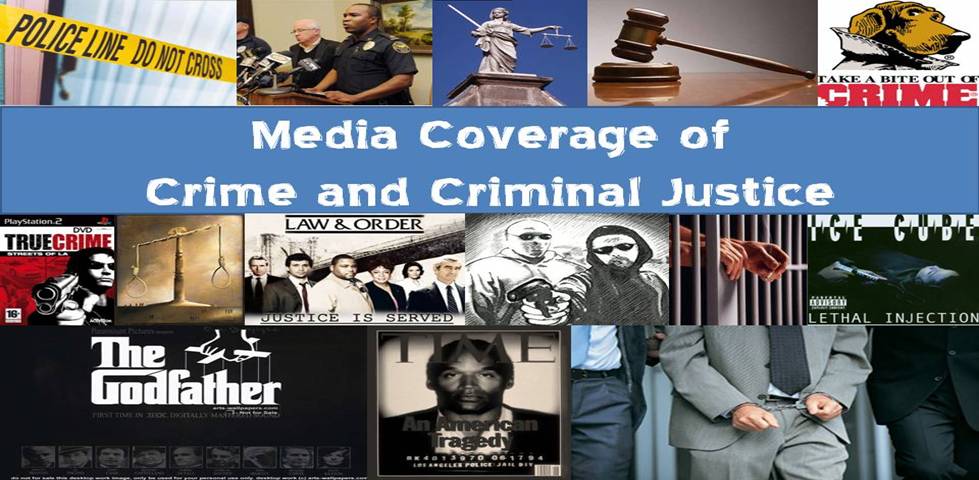
This is how local crime stories become national crime stories, just as explained in the book. 

"'It's a real-life soap opera, all the thrills you might expect to get from an episode of LA Law,' said Eric Deggans of the St. Petersburg Times. So the question might be, how come soap operas are so popular?

Robin Simon, a professor of sociology at Wake Forest University in North Carolina, adds the issue of the archetypal offender and victim:

"'A beautiful woman accused of killing her sweet child and then accused of lying and her father has to take the stand and he's accused of having an affair. The fact it's a woman on trial has heightened interest' because the allegation breaks the maternal bond society expects women to have with their children.

"'The media attention this has generated would not be as significant if it was a father murdering a child.'"

That's the "evil woman" hypothesis discussed in the text.

Finally, Simon adds: "'A journalist was interviewing people in the line waiting to get into court. One woman said 'I can't wait to see it. This is the ultimate reality show. And then she giggled. She didn't even perceive this as a real case with real people. It was sick.'"

The ultimate reality show? And why do we like those shows?

A colleague and friend suggested to me that we like the things that we know probably won't happen to us. So instead of being interested in stories about the realities of corporate health care (which does impact us), mass layoffs (which do impact us), the unfair tax system (which does impact us), and similar stories, we tune those out in favor of stories like the Casey Anthony murder trial, because it is entertaining like a soap opera or reality TV show.

And some people are so outraged by the jury verdict, as if they know better than the jury who heard the evidence (rather than the talking heads on TV) and were instructed in how to apply the actual law to the case (which requires that Anthony's guilt be proven beyond a reasonable doubt) rather than who heard the tortured opinions of people like Nancy Grace.

Well, if that did not outrage followers of the trial who were convinced that Anthony was guilty, this story by Fox News that Anthony "can earn millions from media, Hollywood" surely will.

Oh brother.

Monday, July 4, 2011

Fireworks, parades, cookouts, and LIVE MURDER TRIALS

Happy 4th of July!

Enjoy your fireworks. The parade. The cookout with family and friends.

And, in case you are interested, LIVE coverage of the closing arguments of a murder case in Florida.

Yep, three years after the murder and three months after the case began, it is STILL on. Even on the 4th of July.


Check out this coverage online.

Casey Anthony trial: State explains science behind case

Chicago Tribune -
Jose Baez talks with Casey Anthony at the start of court on Monday. (Red Huber, Orlando Sentinel) By Bianca Prieto, Orlando Sentinel Today the jury is expected to begin deliberating the fate of accused child-murderer Casey Anthony.

Thursday, June 30, 2011

About the guy at the gym

This morning I was at one of the beautiful gyms at ASU. And now I remember why I normally wear headphones .... not because of the terrible music they play (that's bad enough), but because of the loud mouth people that occasionally sit in there and tell their life stories instead of working out.

Don't get me wrong, this guy was muscular. He works out. But he had a small head (sort of like the guy to the left).

This guy almost did not stop talking the whole time he was in there. And since the gym was nearly empty, it was very quiet. Thus, his shouting to the girl he was talking to could easily be heard by me, even all the way across the gym.

I remember one thing he yelled to her: "You don't have an Internet connection at your place? Or a cell phone? How do you know what is going on in the world???!!!???!!!"

His next sentence was, "Like in the Casey Anthony trial."

That's enough said right there, isn't it?